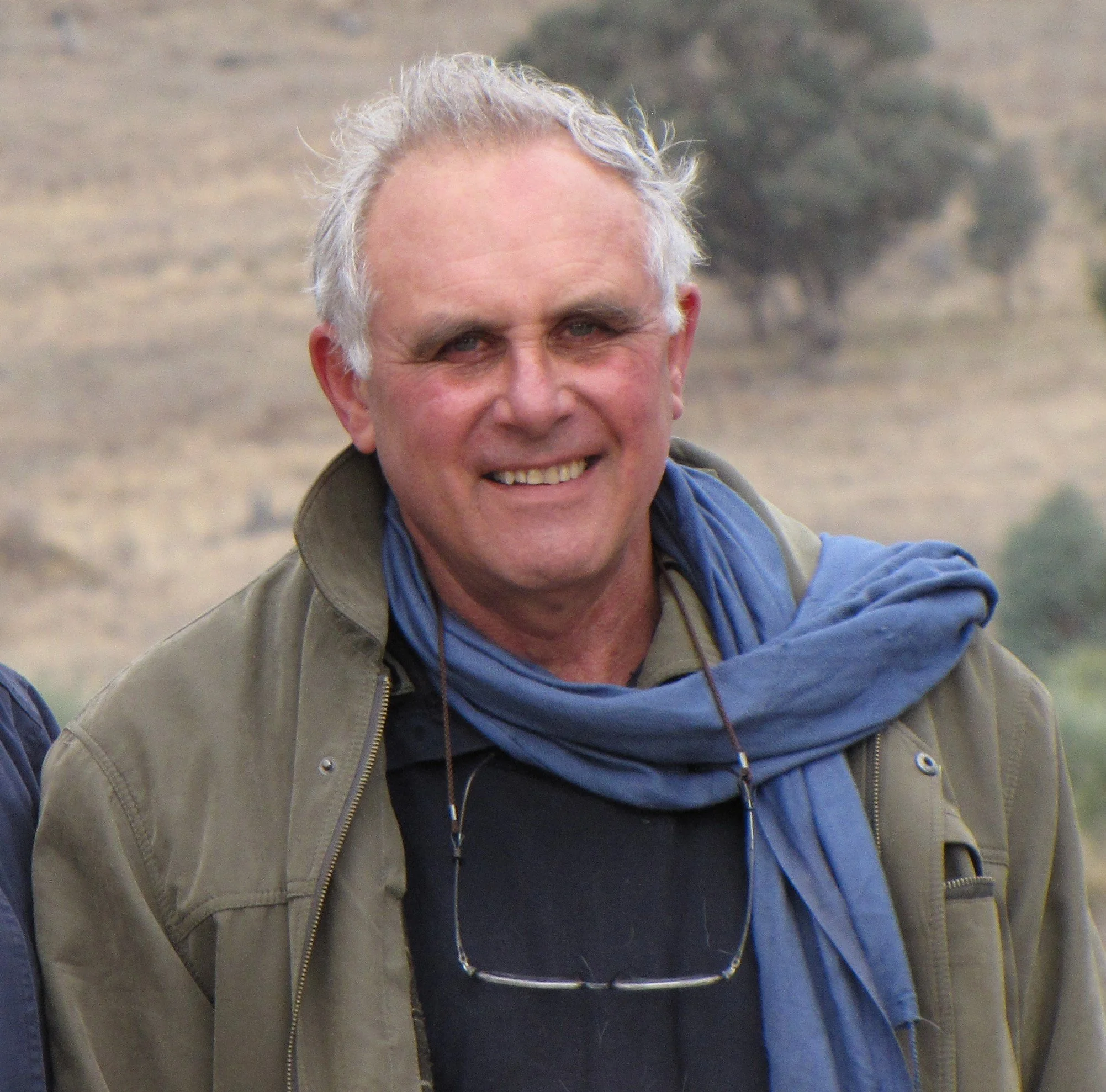
Bruce Haigh (1970) Honoured in South Africa
While in South Africa in November 2025 for the G20 Leaders’ Summit, Prime Minister Anthony Albanese visited Freedom Park Heritage Site and Museum in Pretoria, where he unveiled the names of three Australians on the Wall of Names – Former Prime Ministers Malcom Fraser and Bob Hawke, and diplomat Bruce Haigh. Freedom Park and the Wall of Names was established as a post-apartheid memorial site and serves to commemorate the sacrifices of those who fought for South Africa’s freedom and democracy. Each of these three Australians took courageous and principled action in opposing apartheid and supporting South Africa’s struggle for liberation. Their commitment to equality, justice and human dignity is now permanently recognised on this national heritage site.
Bruce Haigh (1970) studied politics at UWA and lived at St George’s College - in 1971 he was elected as Senior Student. He had the unique honour of working with three Wardens in one year, the retiring Warden Josh Reynolds in first term, Acting Warden Ian George in second term and new Warden Peter Simpson in third term. Bruce was also the Arts Union President during his time at UWA. In 1972 he joined the Commonwealth Department of Foreign Affairs.
In 1976 he flew into apartheid South Africa, then a police state in the grip of a student uprising in which 700 protestors died during its early weeks. Bruce found himself immediately engulfed in black artists, activists, trade unionists, journalists and defence lawyers, all eager for change. He began to build a wide network among the dissidents.
He soon crossed swords with his Ambassador over the plight of detained YWCA workers. Unbowed, Bruce continued to work to have Australia grasp the true situation.
He befriended legendary newspaper editor Donald Woods, an outspoken critic of the regime. Through Woods he met Desmond Tutu and became a close contact of leading dissident, Steve Biko, before he was detained: “He was a natural leader. Tall, good looking, highly intelligent. He just had that indefinable and yet very strong presence of leadership. If he’d lived, I think he would have been the leader of South Africa…Within three weeks of being detained Steve was dead, beaten by police whilst handcuffed.”
With Woods, he attended Biko’s funeral, reporting the vast gathering as a turning point in relations between blacks and whites in South Africa.
Woods was arrested trying to leave the country, banned from publishing and placed under home detention. A poisoned T-shirt was sent to his infant daughter. He decided to flee the country – and asked Bruce for help. With Woods disguised as a priest, Bruce drove him across the border into Lesotho, to the safety of British authorities. Donald Woods’ escape and Bruce’s role in it were later depicted in the feature film “Cry Freedom”.
More information about the honour bestowed upon Bruce and the actions he took to oppose apartheid and support South Africa’s struggle for liberation can be found here: https://www.theguardian.com/australia-news/2025/nov/21/bruce-haigh-australian-diplomat-apartheid-south-africa-honoured-wall-of-names-freedom-park
His obituary was published on page 44 of the Winter 2023 Georgian magazine which is on our website here: https://stgc.uwa.edu.au/the-georgian-magazine