
Annual Giving 2026: Percy Rowan Scholarship
In 2031 St George’s College will celebrate its Centenary. Annual Giving this year continues to raise funds for Centenary Appeal scholarships which will commemorate the 14 young Georgians who died in service during the Second World War, ensuring that their sacrifice will be remembered in perpetuity. Their stories can be found on our website here. This year we are raising funds to award a scholarship in memory of Percy Rowan (1935).
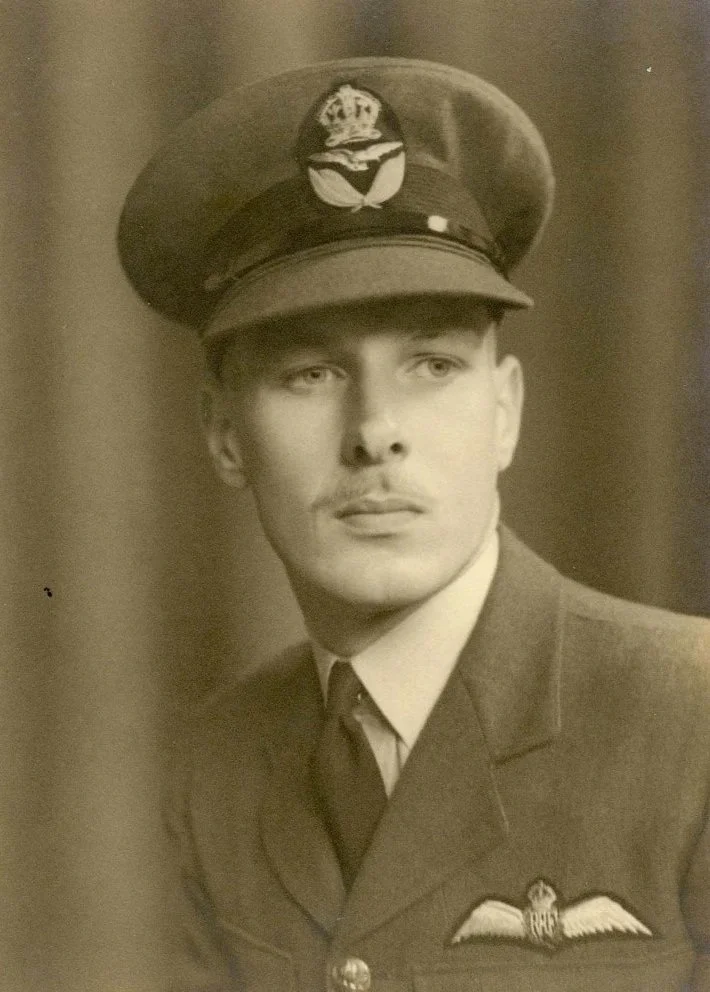
Flying Officer Percival John Hamilton Rowan
(1916 -1940)
May 10th 1940 marked the end of the phony war and the beginning of the Fall of France. German armies swept into France and the Netherlands. Neville Chamberlain resigned and was replaced as Prime Minister by Winston Churchill and St George’s College suffered its first war-time fatality - Percy Rowan, aged just 24 years old. As he was with the RAF, rather than the RAAF, his name is not listed on the State War Memorial in Kings Park and so it seems even more fitting that a scholarship be created in his memory.
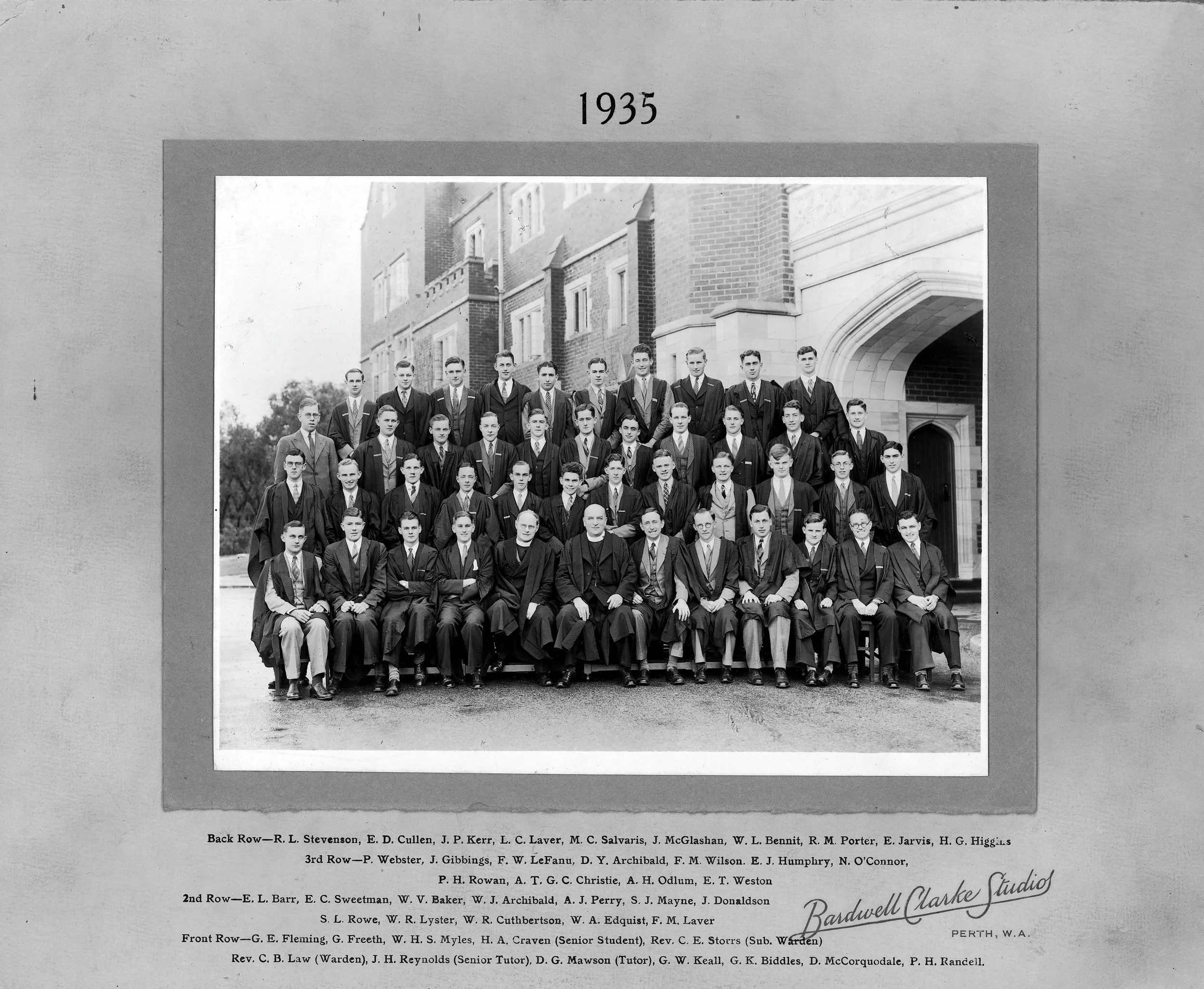
Percy Rowan attended Christ Church Grammar School from 1927 to 1932, but it was not until 1935 that he arrived at St George’s. He is one of four residents pictured in the 1935 College Photograph who were to die tragically in active service. In the 1940 Dragon, Warden Josh Reynolds says of Percy: “He was of a quiet and delightful disposition, and possessed great spiritual courage.”
After a year Percy decided that his future lay in a military career, and despite poor eyesight he enrolled in the RAAF’s Short Service Commission Scheme, through which he would earn his wings. SSCS cadets underwent a year’s training at Point Cook, Victoria, after which they could continue with the RAAF or transfer to the RAF, either of which would enroll them as pilot officers for four years. Percy enlisted with the RAF in 1937. It was a great adventure for him. He wrote back to friends at St George’s:
I fly solo now. I have had plenty of thrills, but have survived them all. It’s a great life. Well, I must close now. Wishing you are happier than I – and that’s saying a lot!
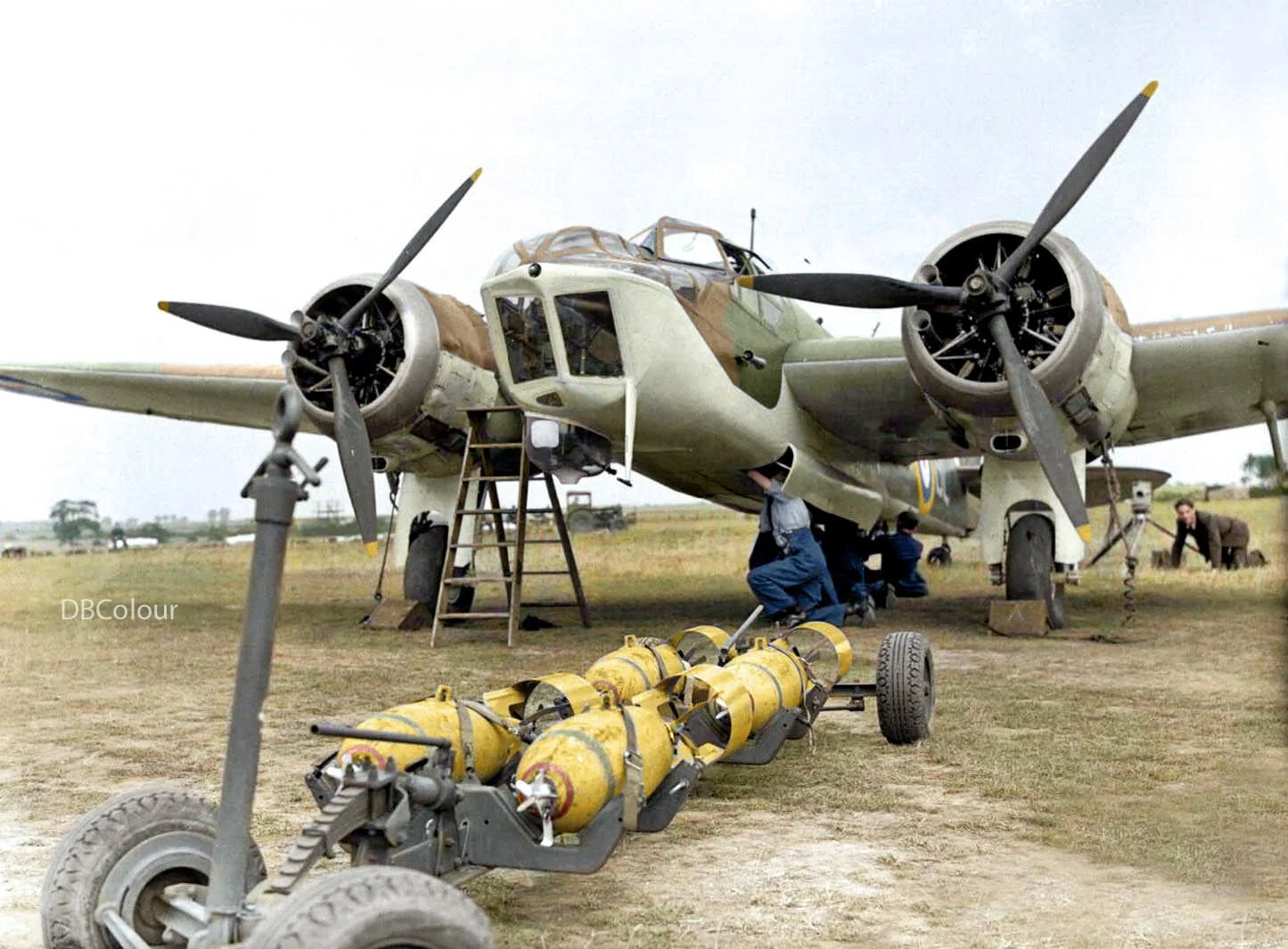
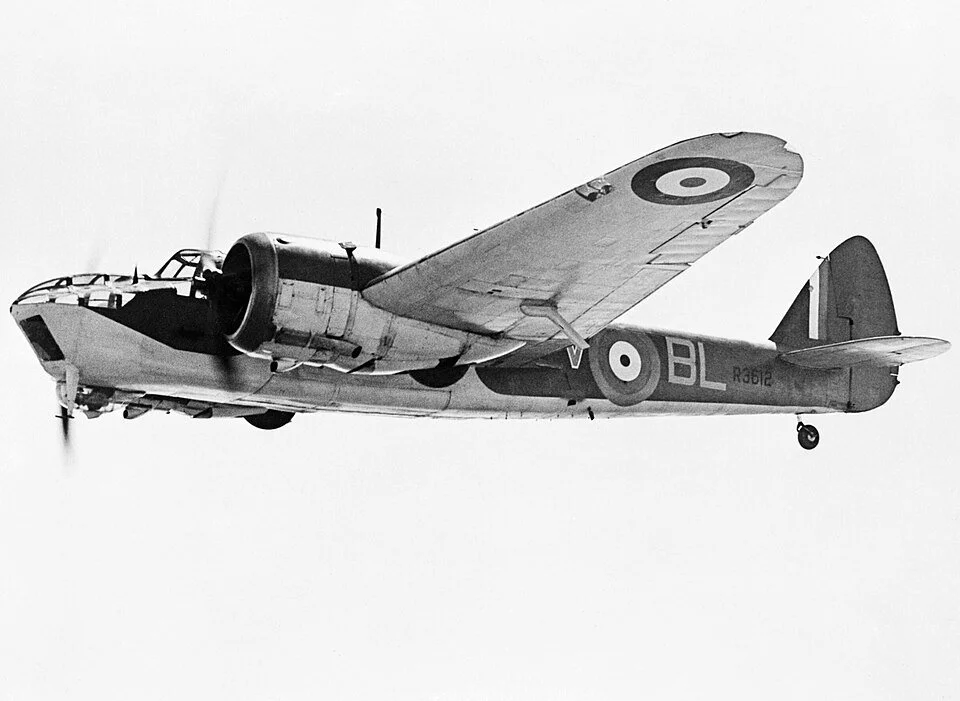
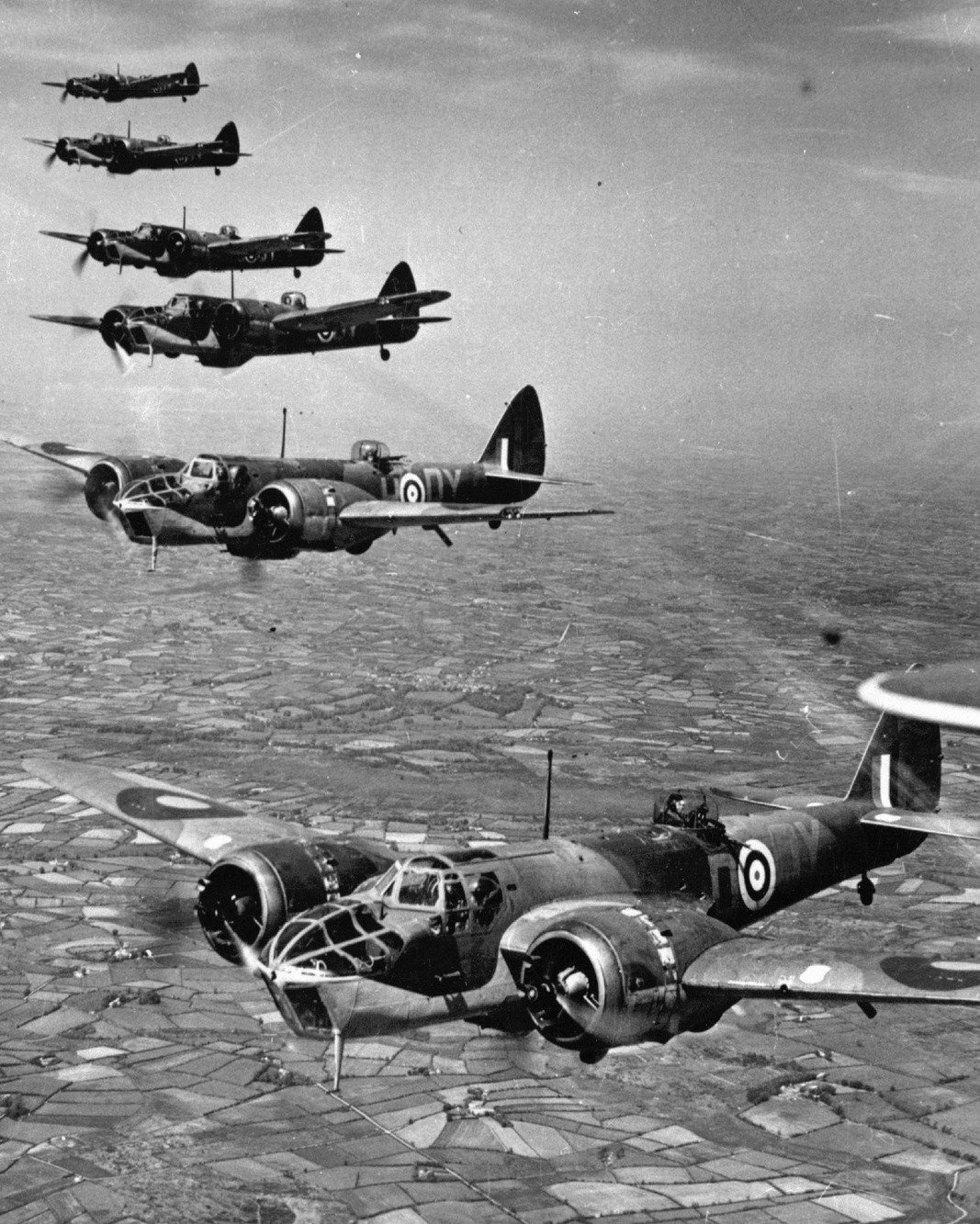
In December 1939, 40 Squadron moved from its base at Béthenivillein France to RAF Wyton, where it was re-equipped with Bristol Blenheim Mk. IV high speed light bombers. With its proximity to the east coast Wyton was an ideal location for the allied air forces.
A friend of Percy’s from that time, Jo Stevenson, recalls:
“Percy Rowan came from Point Cook, where he had been trained, to the 40th Squadron of the RAF. Like all the other officers from Point Cook, he always wore his blue Australian uniform. Percy and I became friends. As part of the Advanced Air Striking Force, our Squadron flew Fairey Battle bombers to Bétheniville in France on September 2, 1939, to operate against the enemy from there. In November, Percy, Bill Peterson and I were given three days off; we decided to go to Paris. On the second evening, we went to a café-restaurant. As we entered the café… the owner of the restaurant came up to us. She hugged us and said that we were the first English pilots she had seen since 1918. But Percy was Australian, Bill a Canadian, and I a Scot!
On December 2, we flew back to England to switch to Blenheims. When his Fairey Battle bomber was in a hangar, Percy asked a member of the ground crew to stand under one of the aircraft's wings to catch a box of champagne that he had brought from France. He pressed a button usually used to release a bomb. Unfortunately, something went wrong and the box fell onto the concrete floor. The bubbling champagne spilled all over the floor.”
Just five months later, Germany’s blitzkrieg strikes on 10th May 1940 jolted the RAF into frenzied activity. The Luftwaffe had a day-one plan to capture The Hague, the Dutch seat of government, and to do so they had to control the surrounding airfields of Ypenburg, Ockenburg and Valkenburg. In this first day of chaotic fighting the Dutch Air Force lost half its 144 combat aircraft. The first bombs had dropped at Ypenburg at 4am and by midday the base had been captured by paratroopers reinforced by troop landings. But the Dutch fought back, and at 3.10pm the first RAF planes arrived to bomb the field, causing heavy German losses of men and equipment.
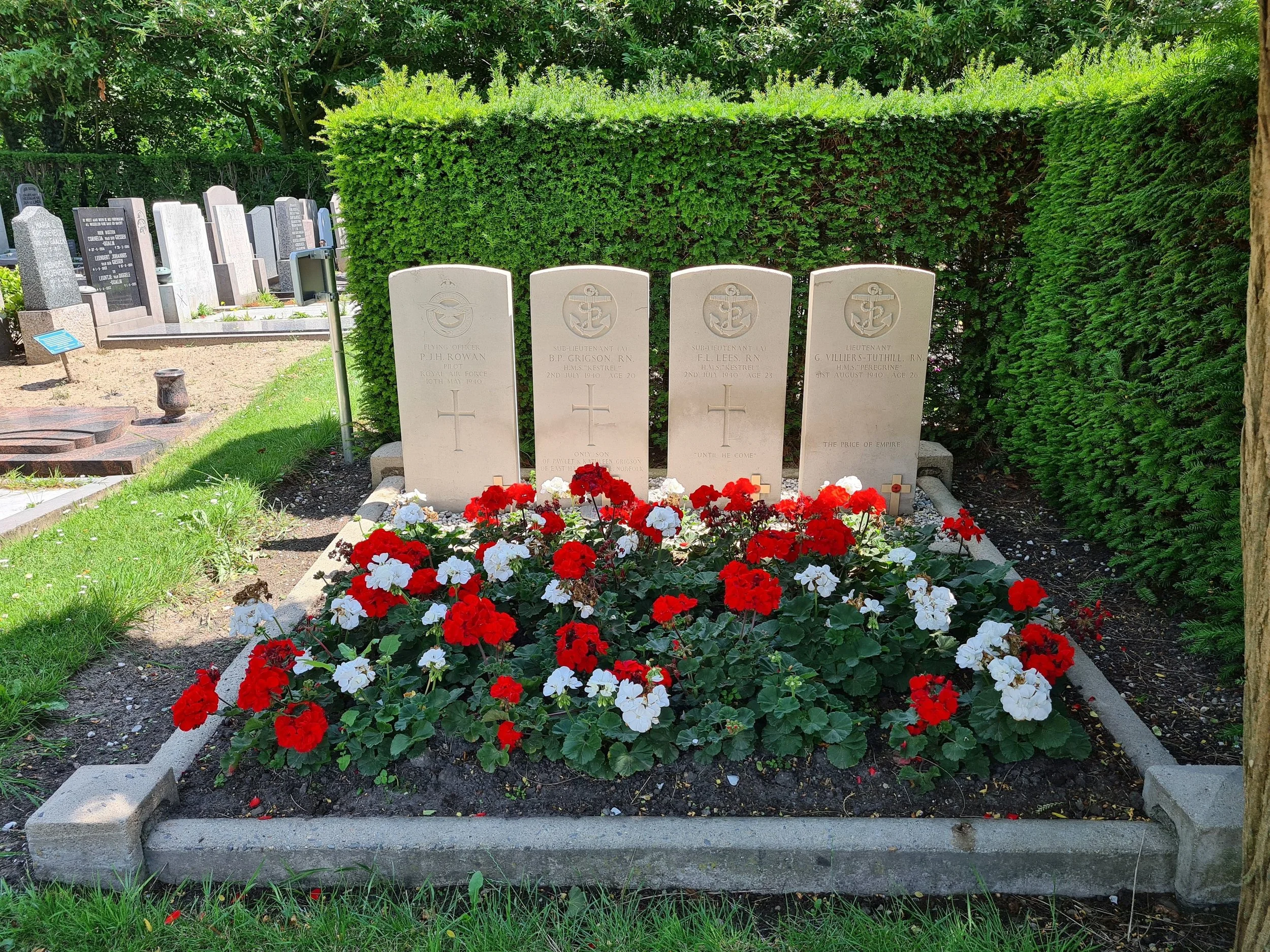
In its very first bombing mission of the war, 12 Blenheims from 40 Squadron were dispatched to bomb Ypenburg airfield. At 3.55pm Pilot Officer Percy Rowan and his two crew took off as part of this force in Blenheim L8828 BL to target the Ypenburg airfield. Most of the bombers successfully attacked the primary target, but three aircraft failed to return. Percy’s Blenheim was shot down by a fighter over the North Sea, off Rotterdam, with the loss of all crew. Weeks later, his body was washed ashore at Rozenburg on 2nd June and was initially buried in situ. A wreath for Percy’s grave was dropped from an English aircraft and was laid on his resting place by Mayor Just de la Paisières. His remains were reburied on 15th March 1941 at the Rozenburg General Cemetery 19km west of Rotterdam. Ten soldiers from the anti-aircraft position near Berkhout's Farm provided military honors, escorting him to his final resting place and firing a volley over the grave. Percy is reputed to have been the first Western Australian to have been killed in the war.
Just two days before Percy died, Viscount Portal (then Commander in Chief of Bomber Command) signaled: “I am convinced that the proposed use of these units is fundamentally unsound...we shall be lucky if we see again as many as half the aircraft we send out each time.” The confirmation of his prophetic words was the terrible toll on day-time bombers with little fighter cover, and the eventual decision to send bombing raids only at night.
In later years, Percy’s half-sister Eleanor Jefferies-Rowan, recalled:
“My half-brother Percy was born on January 29, 1916, in Perth. His father was Archibald Hamilton Rowan, his mother Madeleine Rowan-Brown. The Rowan family has a rich military history. For instance, Father and Uncle Percy participated in the Boer War in South Africa. Uncle Percy also fought in the First World War but was killed in action. My half-brother was named after him. Before Percy left for Point Cook, he had applied for a job as a teacher. Confirmation that he had been accepted did not come until the day of his departure for Point Cook. You could say that fate sent him to war.
From July 15, 1938, he had a five-year appointment with the RAF’s Bomber Command. We were informed that Percy was missing, but it was not until two months later that it became known that he was dead. My mother, his stepmother, always said that he was too sweet and too gentle for war; he was a dreamer. My father was deeply affected by the loss of his son, and I am certain that this shortened his life. He passed away at the age of 64. I have a box of Percy’s school reports, a few photos, and some loose items. It is terrible to know that that is all that remains of him: a box of memories and a grave, somewhere far away.”
--oOo--
Thank you to Brian Wills-Johnson (1964) for compiling Percy's story. Further information can be found here.

To make a donation to this year’s Annual Giving campaign:
Make a secure donation online by credit or debit card
Electronic Funds Transfer (EFT) can be made (within Australia) to BSB :706 001; Account number: 3000 5962
Please use “AG” [for Annual Giving] or “Donation” [for other donations], and yoursurname and initial as referenceCheques can be made out to ‘St George’s College Foundation’ and posted to us (46 Mounts Bay Rd, Crawley WA 6009)
Contact us on +61 8 9449 5555 to make a donation over the phone or to discuss other options
Every donation is welcomed and appreciated.
All donations are tax deductible in Australia and the USA and we can benefit from Gift Aid from the UK. For more informtion please contact the College Foundation by email or call +61 8 9449 5555 .
If you would like to discuss donating to the College, please feel free to call on the number above or email us.