
Grace & Ornament
Mystery Sonata No. 1 in D minor
Heinrich Ignaz Franz Biber
Canzona Prima
Giovanni Girolamo Kapsberger
Fantasia No. 7 in E-flat major
Georg Philipp Telemann
Ciaccona in partite variate
Alessandro Piccinini
Partita No. 2 in D minor for Solo Violin
Johann Sebastian Bach
Artists
-
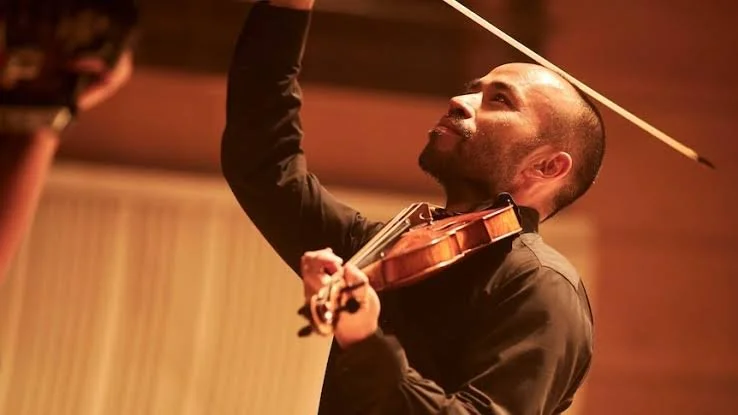
Violinist Shaun Lee-Chen is internationally recognised for his work in historically informed performance and is Concertmaster of the Australian Brandenburg Orchestra. He is in demand as a soloist, guest director and chamber musician across Australia and abroad. Shaun has a special interest in 19th-Century Performance Practice and pedagogy. He holds the position of Chair of Violin/Viola studies at the UWA Conservatorium.
Violin
Shaun Lee-Chen

Krista Low
-
Since graduating from studies at The University of Western Australia, Krista Low has pursued a varied career in historically informed performance, contemporary music and everything in between. As an undergraduate, she was awarded the Pauline Steele Memorial Prize for Solo Cello, the Margaret Bello Prize for Chamber Music and a Wesley Mission Scholarship. She subsequently received a University Postgraduate Award to undertake a Masters in Music at UWA under the supervision of Dr Suzanne Wijsman. Krista has participated in masterclasses and festivals in Canada, France and the Netherlands and appears frequently as a solo, chamber and orchestral musician on both Baroque and modern cello, and viola da gamba. She is a founding member of the Perth-based ensemble, HIP Company.
Cello
Alexis Chin
-
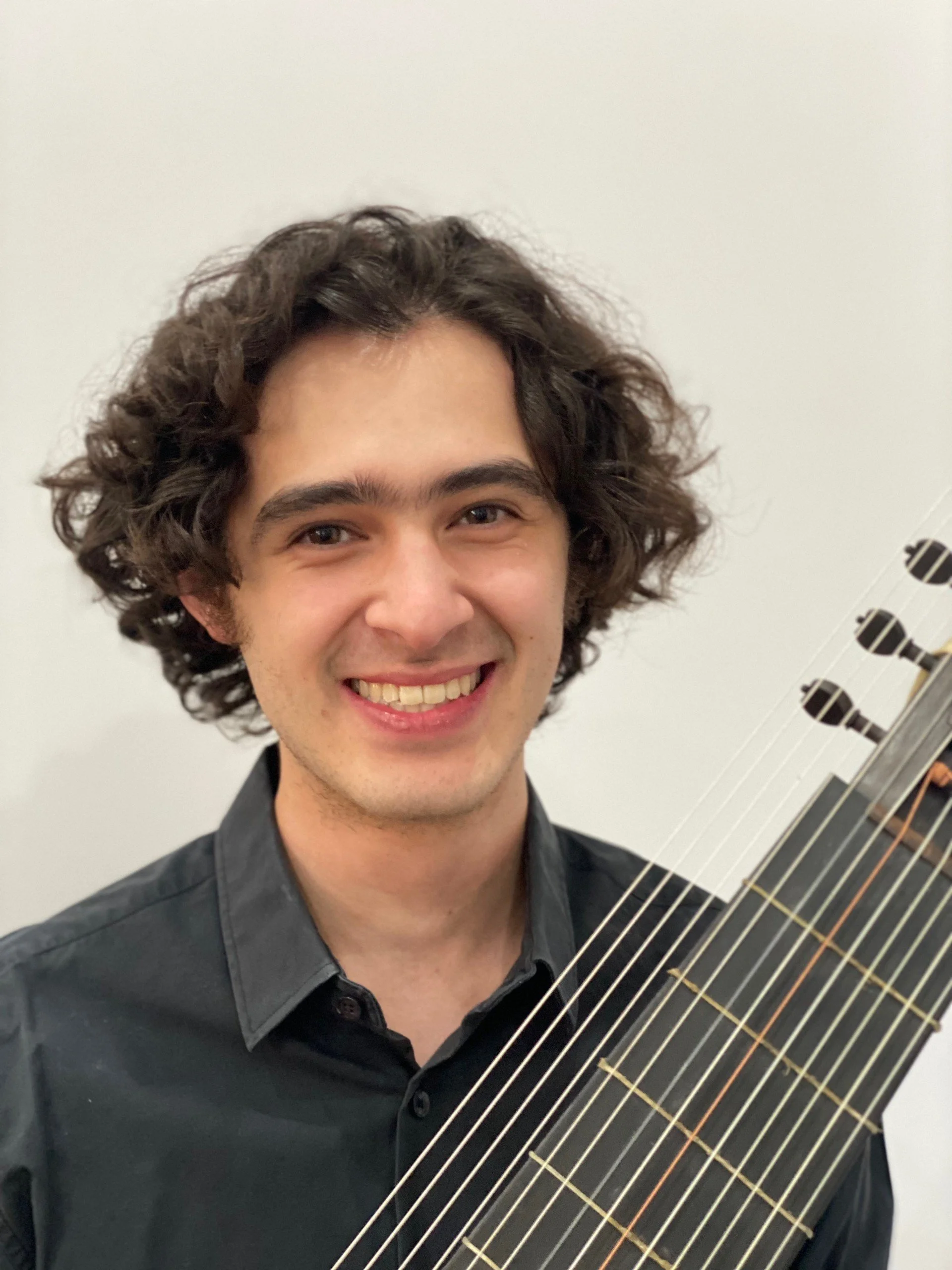
Alexis Chin is a Perth based theorbist and guitarist. A finalist in the 2021 Adelaide International Guitar Competition, he has appeared as soloist with the UWA Symphony Orchestra at Perth Concert Hall. He has received the Edith Cowan Prize for highest academic average and the Gerty Ewen Prize for most outstanding first year instrumentalist. With a strong interest in early music, he performs repertoire from the sixteenth to eighteenth centuries on theorbo and baroque guitar, studying with Nicholas Pollock and undertaking masterclasses with Peter Croton and Josep Marti Maria Duran. He has performed at the Casa de Mateus Early Music Festival in Portugal and presented award winning research at the Musicological Society of Australia.
Theorbo
About the Music
Heinrich Ignaz Franz Biber
-
The Annunciation, Sonatae Mysteriae, c. 1674 - 76
Heinrich Biber’s Mystery Sonatas, composed c.1674–76 and dedicated to the Archbishop of Salzburg, represent one of the most sophisticated examples of seventeenth-century programmatic instrumental music. The cycle comprises fifteen sonatas corresponding to the Joyful, Sorrowful and Glorious Mysteries of the Rosary, followed by a concluding Passacaglia for solo violin.
The first sonata, The Annunciation, is exceptional within the set in that it employs standard violin tuning. All subsequent sonatas use scordatura, altering the tuning to achieve specific sonorities and symbolic resonances. The absence of scordatura here may reflect the theological purity and clarity associated with the Annunciation narrative.
Formally, the sonata reflects the stylus phantasticus tradition: a multi-sectional structure juxtaposing improvisatory passagework, fugal writing and rhetorical contrasts. Biber exploits the violin’s registral extremes and rapid figuration to depict Gabriel’s descent, while sustained harmonic writing and expressive suspensions suggest Mary’s contemplative response. The work stands at the intersection of devotional symbolism and virtuosic instrumental writing, demonstrating how instrumental music in the late seventeenth century could convey theological narrative without text.
(1644–1704)
Giovanni Girolamo Kapsberger
-
Libro Primo di Canzoni, 1615
Active in Rome in the early seventeenth century, Giovanni Girolamo Kapsberger was central to the development of the theorbo and chitarrone repertory. His instrumental canzonas reflect the transition from Renaissance polyphony to the emerging Baroque idiom.
The canzona derives from the Franco-Flemish chanson and typically features imitative counterpoint structured in contrasting sections. In Canzona Prima, Kapsberger retains motivic imitation but introduces heightened rhythmic vitality and textural contrast. Short fugal subjects give way to freer passages, revealing the influence of the stylus phantasticus and the increasing autonomy of instrumental forms.
Harmonically, the work reflects the modal language of the late Renaissance, yet its cadential emphasis and sectional clarity anticipate tonal organisation. Ornamentation and diminutions serve not merely decorative purposes but articulate structural transitions. The piece exemplifies the experimental spirit of early Baroque Rome, where instrumental music was gaining expressive independence from vocal models.
(C. 1580–1651)
Georg Philipp Telemann
-
12 Fantasias TWV 40:33, 1735
Telemann’s Fantasias for solo instrument, published in 1732–33, belong to a mature phase of his career and reflect the synthesis of contrapuntal craft and gallant clarity characteristic of the early eighteenth century.
Fantasia No. 7 in E-flat major unfolds in several contrasting movements, often alternating between slow, lyrical sections and lively dance-inspired passages. Though written for a single melodic instrument, Telemann frequently implies polyphony through arpeggiation, registral displacement and motivic sequencing. This technique, inherited from earlier solo violin traditions, creates the illusion of multiple voices within a single line.
The harmonic language is firmly tonal yet enriched by expressive chromaticism and carefully prepared dissonance. Telemann’s treatment of rhythm, particularly in the faster sections, reflects the influence of French dance forms, while the cantabile writing of the slower passages demonstrates Italianate lyricism. The fantasia as a genre allowed composers considerable formal flexibility; here Telemann balances freedom with structural coherence.
(1681-1767)
Alessandro Piccinini
-
Intavolatura di liuto et di chitarrone, libro primo, 1623
Alessandro Piccinini was among the earliest composers to publish extensively for theorbo and archlute, contributing significantly to the development of idiomatic plucked-string writing. His Ciaccona in partite variate exemplifies the early Baroque fascination with ground-bass variation.
The chaconne, likely of Spanish origin, is built upon a repeating harmonic progression, typically in triple metre. In Piccinini’s treatment, the harmonic framework remains stable while successive variations elaborate the texture through rhythmic intensification, ornamental figuration and registral expansion.
Unlike later monumental chaconnes, this work retains an intimate scale, emphasising clarity of line and timbral nuance. The interplay between consonance and prepared dissonance reflects evolving tonal practice, while the ornamental diminutions demonstrate the close relationship between written composition and improvisatory performance practice. The piece illustrates how variation form served both structural and expressive purposes in early seventeenth-century instrumental music.
The canzona derives from the Franco-Flemish chanson and typically features imitative counterpoint structured in contrasting sections. In Canzona Prima, Kapsberger retains motivic imitation but introduces heightened rhythmic vitality and textural contrast. Short fugal subjects give way to freer passages, revealing the influence of the stylus phantasticus and the increasing autonomy of instrumental forms.
Harmonically, the work reflects the modal language of the late Renaissance, yet its cadential emphasis and sectional clarity anticipate tonal organisation. Ornamentation and diminutions serve not merely decorative purposes but articulate structural transitions. The piece exemplifies the experimental spirit of early Baroque Rome, where instrumental music was gaining expressive independence from vocal models.
(1566-C. 1638)
Johann Sebastian Bach
-
Bwv 1004, 1717 - 20
Johann Sebastian Bach’s Partita No. 2 in D minor forms part of the celebrated Sonatas and Partitas for Solo Violin, composed during his years in Köthen. In these works, Bach expanded the expressive and technical possibilities of the instrument to unprecedented heights.
The partita follows a dance sequence: Allemanda, Corrente, Sarabanda and Giga, culminating in the monumental Ciaccona. While the earlier movements combine elegance with contrapuntal sophistication, the final Chaconne stands as one of the towering achievements of the violin repertoire. Built on a repeating harmonic progression, it unfolds across a vast architectural span, encompassing grief, radiance and transcendence. Through multiple-stopping, implied counterpoint and inexhaustible variation, Bach creates the illusion of an entire ensemble within a single instrument.
The Partita as a whole exemplifies Bach’s ability to unite structural mastery with profound spiritual depth, bringing this programme to a work of extraordinary expressive power.
The chaconne, likely of Spanish origin, is built upon a repeating harmonic progression, typically in triple metre. In Piccinini’s treatment, the harmonic framework remains stable while successive variations elaborate the texture through rhythmic intensification, ornamental figuration and registral expansion.
Unlike later monumental chaconnes, this work retains an intimate scale, emphasising clarity of line and timbral nuance. The interplay between consonance and prepared dissonance reflects evolving tonal practice, while the ornamental diminutions demonstrate the close relationship between written composition and improvisatory performance practice. The piece illustrates how variation form served both structural and expressive purposes in early seventeenth-century instrumental music.
The canzona derives from the Franco-Flemish chanson and typically features imitative counterpoint structured in contrasting sections. In Canzona Prima, Kapsberger retains motivic imitation but introduces heightened rhythmic vitality and textural contrast. Short fugal subjects give way to freer passages, revealing the influence of the stylus phantasticus and the increasing autonomy of instrumental forms.
Harmonically, the work reflects the modal language of the late Renaissance, yet its cadential emphasis and sectional clarity anticipate tonal organisation. Ornamentation and diminutions serve not merely decorative purposes but articulate structural transitions. The piece exemplifies the experimental spirit of early Baroque Rome, where instrumental music was gaining expressive independence from vocal models.
(1685-1750)
Our Patrons
The generous contribution of our patrons allows us to continue encouraging and guiding aspiring young musicians.
-
Wendy Erber and Gary Hoffman
Tony and Sue Field
Janet Holmes à Court
Tony and Gwenyth Lennon
Jon and Mary Meyer
Jennifer Nicol
John Rodgers
Margie and Alastair Tulloch
Peter Wreford
-
Wendy Erber and Gary Hoffman
Marino Evangelisti and Sandra Riccelli
Susan Hovell
John and Alison Rigg
-
Hugh and Mary Barrett-Lennard
David and Christine Burt
Craig Carter and Robyn Nettleton
John Cowdell
Tony and Lynne Edis
Peter Ingram
Peter and Glen Knight
Peter and Joelle Larsen
Christine Lawson-Smith
Hamish McGlashan
Di and Sandy Mercer
Frances Morrell
Robert and Lynette Nicholson
Maurice and Jennifer Owen
Anita Summers
Clive and Beth Trott
Paul and Jennifer Woods
-
Priscilla Campbell-Wilson
Jennifer and Tom Cook
Rosemary Cussons
Peter Eadington
Roger Paterson
If you’d like to support the music program, you can find out more via our website or by emailing Luke Donohoe.