
Winter Reflections
Programme
Johann Sebastian BACH
6 Cello Suites (Excerpts)
Arranged for Viola
Frédéric CHOPIN
Waltz in E flat Major
(Grand Valse brillante)
Ludwig van BEETHOVEN
Violin Sonata No. 9 in A Major (Kreutzer Sonata)
6 Cello Suites (Excerpts) Arranged for Viola,
BWV 1007-10012
I. Adagio sostenuto - Presto
II. Andante con variazioni
III. Presto
Antonín DVOŘÁK
Songs My Mother Taught Me
Johann Sebastian BACH
(1685 - 1750)
William KROLL
Violin Sonata No. 9 in A Major (Kreutzer Sonata), Op. 47
Waltz in E flat Major (Grand Valse brillante), Op. 18
Banjo and Fiddle
I. Adagio sostenuto - Presto
II. Andante con variazioni
III. Presto
Songs My Mother Taught Me
Banjo and Fiddle
Frédéric CHOPIN
(1810 - 1849)
Ludwig van BEETHOVEN
(1770 - 1827)
Antonín DVOŘÁK
(1841 - 1904)
William KROLL
(1901 - 1980)
Artists
Paul Wright Violin
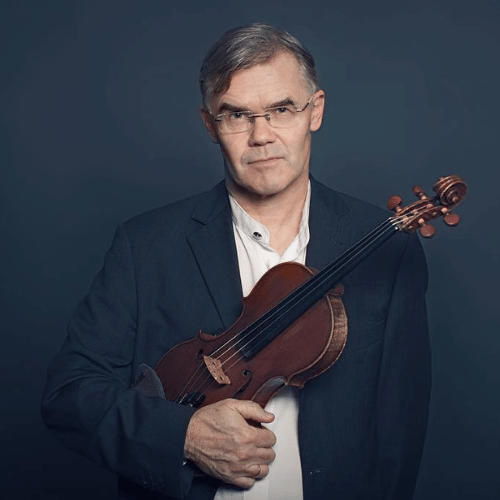
Born in Adelaide, Paul Wright began studying violin with Lyndall Hendrickson at the age of eight and, three years later, gained a place at the Yehudi Menuhin School in England. He later studied at the Guildhall School in London before continuing at the Juilliard School in New York under the renowned pedagogue Ivan Galamian.
Throughout his career, Paul has appeared as a director, soloist and concertmaster with many of Australia’s leading orchestras and ensembles, including the Australian String Quartet, Australian Chamber Orchestra, Ensemble of the Classic Era, Australian Brandenburg Orchestra, Tasmanian Symphony Orchestra, Melbourne Symphony Orchestra and West Australian Symphony Orchestra.
Paul has also enjoyed a distinguished career as an educator and chamber music coach, teaching at the Australian National Academy of Music in Melbourne. He served as Head of Strings at UWA for 25 years and was Winthrop Professor until 2015. From 2019 to 2022, he was Head of Strings at WAAPA and is currently a Music Fellow at St George’s College.
-
Born in Adelaide, Paul Wright began studying violin with Lyndall Hendrickson at the age of eight and, three years later, gained a place at the Yehudi Menuhin School in England. He later studied at the Guildhall School in London before continuing at the Juilliard School in New York under the renowned pedagogue Ivan Galamian.
Throughout his career, Paul has appeared as a director, soloist and concertmaster with many of Australia’s leading orchestras and ensembles, including the Australian String Quartet, Australian Chamber Orchestra, Ensemble of the Classic Era, Australian Brandenburg Orchestra, Tasmanian Symphony Orchestra, Melbourne Symphony Orchestra and West Australian Symphony Orchestra.
Paul has also enjoyed a distinguished career as an educator and chamber music coach, teaching at the Australian National Academy of Music in Melbourne. He served as Head of Strings at UWA for 25 years and was Winthrop Professor until 2015. From 2019 to 2022, he was Head of Strings at WAAPA and is currently a Music Fellow at St George’s College.
Raymond Yong Piano
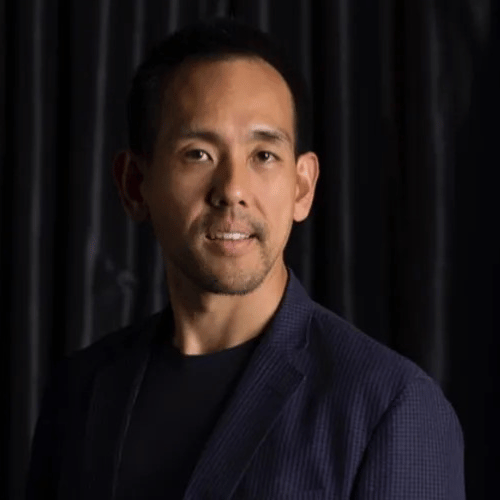
Born in Malaysia, Raymond Yong emigrated to Australia at the age of two and later studied piano and conducting at the University of Melbourne under Stephen McIntyre and John Hopkins. A German government scholarship then took him to Hannover, where he undertook advanced piano studies with Karl-Heinz Kämmerling at the University of Music and Theater in Hannover.
Throughout his career, Raymond has performed extensively in Australia and internationally appearing with many of the country’s leading instrumentalists, singers and ensembles. He has been a guest concerto soloist with the Auckland Philharmonia, Melbourne, Sydney, Queensland, Tasmanian and West Australian Symphony Orchestras, and has appeared at festivals for Musica Viva Australia and the Melbourne International Arts Festival.
Now based in Perth, Raymond combines performance with teaching and research. His doctoral work explored approaches to reducing pain and injury risk for pianists while optimising performance outcomes. Raymond has taught at WAAPA and the UWA Conservatorium of Music and is currently a Music Fellow at St George’s College.
-
Born in Malaysia, Raymond Yong emigrated to Australia at the age of two and later studied piano and conducting at the University of Melbourne under Stephen McIntyre and John Hopkins. A German government scholarship then took him to Hannover, where he undertook advanced piano studies with Karl-Heinz Kämmerling at the University of Music and Theater in Hannover.
Throughout his career, Raymond has performed extensively in Australia and internationally appearing with many of the country’s leading instrumentalists, singers and ensembles. He has been a guest concerto soloist with the Auckland Philharmonia, Melbourne, Sydney, Queensland, Tasmanian and West Australian Symphony Orchestras, and has appeared at festivals for Musica Viva Australia and the Melbourne International Arts Festival.
Now based in Perth, Raymond combines performance with teaching and research. His doctoral work explored approaches to reducing pain and injury risk for pianists while optimising performance outcomes. Raymond has taught at WAAPA and the UWA Conservatorium of Music and is currently a Music Fellow at St George’s College.
About the Music
-
Cello Suites (Excerpts) Arranged for Viola - BWV 1007 - 10012
Bach’s six Suites for Solo Cello stand among the most revered works in the solo string repertoire. Written during Bach’s years at Köthen, probably between 1717 and 1723, the suites transcend the practical function of dance music and become profound explorations of harmony, structure and instrumental colour. Although composed for cello, they have long found a natural home on the viola, whose warm middle register and vocal quality bring a distinctive intimacy to the music.
Each suite follows a broadly similar sequence of Baroque dance movements, usually beginning with a Prelude and continuing through Allemande, Courante, Sarabande and Gigue, with additional paired dances inserted before the finale. Yet Bach transforms these stylised dances into deeply expressive musical worlds. Through implied counterpoint and remarkably economical writing, he creates the illusion of several voices unfolding simultaneously from a single melodic line.
More than three centuries after their composition, the suites remain both technically demanding and spiritually expansive. Their enduring appeal lies in the extraordinary way Bach combines intellectual precision with emotional directness, creating music that feels at once deeply personal and universally timeless.
Composed in the early 1830s, Chopin’s Grand Valse brillante was the first of his waltzes to be published and quickly became one of his most celebrated piano works. Although inspired by the fashionable ballroom dances of Parisian high society, Chopin transformed the waltz into something far more sophisticated and poetic than music intended simply for dancing.
Johann Sebastian BACH
-
Waltz in E flat Major (Grand Valse brillante) - Op. 18
The work opens with a brilliant flourish before launching into its elegant principal theme, full of sparkling passagework and buoyant rhythmic energy. Throughout the piece, contrasting episodes alternate between dazzling virtuosity and moments of lyrical charm, revealing Chopin’s gift for combining technical brilliance with expressive nuance. Beneath the glittering surface lies an unmistakable refinement of harmony and melodic shaping that elevates the piece well beyond salon entertainment.
Chopin himself was known for the delicacy and flexibility of his playing rather than sheer power, and the Grand Valse brillante reflects this aesthetic. Its brilliance is never merely athletic. Instead, the work depends on elegance, wit and rhythmic poise, particularly in the subtle sway of the waltz pulse that gives the music its distinctive character.
The piece also captures the cosmopolitan atmosphere of nineteenth-century Paris, where aristocratic salons provided the setting for much of Chopin’s career. Yet despite its outward glamour, the music retains the unmistakable intimacy and individuality that define Chopin’s style. Even in its most exuberant moments, there is an underlying sense of sophistication and emotional sensitivity that continues to captivate audiences today.
Frédéric CHOPIN
Bach’s six Suites for Solo Cello stand among the most revered works in the solo string repertoire. Written during Bach’s years at Köthen, probably between 1717 and 1723, the suites transcend the practical function of dance music and become profound explorations of harmony, structure and instrumental colour. Although composed for cello, they have long found a natural home on the viola, whose warm middle register and vocal quality bring a distinctive intimacy to the music.
Each suite follows a broadly similar sequence of Baroque dance movements, usually beginning with a Prelude and continuing through Allemande, Courante, Sarabande and Gigue, with additional paired dances inserted before the finale. Yet Bach transforms these stylised dances into deeply expressive musical worlds. Through implied counterpoint and remarkably economical writing, he creates the illusion of several voices unfolding simultaneously from a single melodic line.
More than three centuries after their composition, the suites remain both technically demanding and spiritually expansive. Their enduring appeal lies in the extraordinary way Bach combines intellectual precision with emotional directness, creating music that feels at once deeply personal and universally timeless.
The work opens with a brilliant flourish before launching into its elegant principal theme, full of sparkling passagework and buoyant rhythmic energy. Throughout the piece, contrasting episodes alternate between dazzling virtuosity and moments of lyrical charm, revealing Chopin’s gift for combining technical brilliance with expressive nuance. Beneath the glittering surface lies an unmistakable refinement of harmony and melodic shaping that elevates the piece well beyond salon entertainment.
Chopin himself was known for the delicacy and flexibility of his playing rather than sheer power, and the Grand Valse brillante reflects this aesthetic. Its brilliance is never merely athletic. Instead, the work depends on elegance, wit and rhythmic poise, particularly in the subtle sway of the waltz pulse that gives the music its distinctive character.
The piece also captures the cosmopolitan atmosphere of nineteenth-century Paris, where aristocratic salons provided the setting for much of Chopin’s career. Yet despite its outward glamour, the music retains the unmistakable intimacy and individuality that define Chopin’s style. Even in its most exuberant moments, there is an underlying sense of sophistication and emotional sensitivity that continues to captivate audiences today.
-
Violin Sonata No. 9 in A Major (Kreutzer Sonata) - Op. 47
I. Adagio sostenuto - Presto
II. Andante con variazioni
III. PrestoBeethoven’s Kreutzer Sonata is one of the towering achievements of the violin repertoire, remarkable for both its scale and its dramatic intensity. Completed in 1803 during a period of extraordinary creative expansion, the work shattered contemporary expectations of the violin sonata, transforming it from an elegant chamber piece into a work of almost symphonic power.
Originally dedicated to the violinist George Bridgetower, who gave the premiere alongside Beethoven himself at the piano, the sonata was later rededicated to the French violinist Rodolphe Kreutzer, though Kreutzer reportedly never performed it, considering the work too extravagant and difficult.
The sonata opens with a strikingly dramatic introduction before erupting into a fiery Presto of immense energy and technical demand. Beethoven treats the violin and piano as equal partners, engaging them in a relentless dialogue. The second movement provides contrast through a richly varied set of variations on a serene theme, moving through moments of lyricism, brilliance and profound introspection. The final movement bursts forth with exuberant momentum, drawing on the rhythmic vitality of the tarantella and driving the work to a thrilling conclusion.
The Kreutzer Sonata occupies a pivotal place in Beethoven’s output, standing at the threshold of his heroic middle period. Its emotional extremes, structural boldness and virtuosic writing expanded the possibilities of chamber music and influenced generations of composers. More than two centuries later, the sonata remains a powerful testament to Beethoven’s revolutionary spirit and his ability to fuse drama, intellect and raw emotional force into a single compelling musical statement.
Ludwig van BEETHOVEN
-
Songs My Mother Taught Me
Songs My Mother Taught Me is the best-known of the seven songs that form Dvořák’s Gypsy Songs, Op. 55, composed in 1880 to texts by the Czech poet Adolf Heyduk. Although written in Czech, the song quickly achieved international popularity through translations into many languages and through arrangements for a wide variety of instruments.
The song reflects Dvořák’s lifelong gift for melody and his deep connection to Czech folk traditions. Its simple, flowing tune carries an unmistakable sense of nostalgia, expressing the idea that songs learned in childhood remain intertwined with memory, identity and emotion throughout life.
Dvořák’s writing is notable for its economy and sincerity. Rather than relying on dramatic gestures, he creates emotional depth through subtle harmonic colouring and expressive melodic contour. The accompaniment gently supports the vocal line, allowing the melody to sing with unaffected warmth and intimacy.
Antonín DVOŘÁK
Violin Sonata No. 9 in A Major (Kreutzer Sonata), Op. 47
I. Adagio sostenuto - Presto
II. Andante con variazioni
III. Presto
William KROLL
Beethoven’s Kreutzer Sonata is one of the towering achievements of the violin repertoire, remarkable for both its scale and its dramatic intensity. Completed in 1803 during a period of extraordinary creative expansion, the work shattered contemporary expectations of the violin sonata, transforming it from an elegant chamber piece into a work of almost symphonic power.
Originally dedicated to the violinist George Bridgetower, who gave the premiere alongside Beethoven himself at the piano, the sonata was later rededicated to the French violinist Rodolphe Kreutzer, though Kreutzer reportedly never performed it, considering the work too extravagant and difficult.
The sonata opens with a strikingly dramatic introduction before erupting into a fiery Presto of immense energy and technical demand. Beethoven treats the violin and piano as equal partners, engaging them in a relentless dialogue. The second movement provides contrast through a richly varied set of variations on a serene theme, moving through moments of lyricism, brilliance and profound introspection. The final movement bursts forth with exuberant momentum, drawing on the rhythmic vitality of the tarantella and driving the work to a thrilling conclusion.
The Kreutzer Sonata occupies a pivotal place in Beethoven’s output, standing at the threshold of his heroic middle period. Its emotional extremes, structural boldness and virtuosic writing expanded the possibilities of chamber music and influenced generations of composers. More than two centuries later, the sonata remains a powerful testament to Beethoven’s revolutionary spirit and his ability to fuse drama, intellect and raw emotional force into a single compelling musical statement.
-
Banjo and Fiddle
Banjo and Fiddle is a sparkling virtuoso showpiece that has delighted audiences since its composition in the mid-twentieth century. An accomplished American violinist, teacher and composer, Kroll was particularly known for writing short character pieces that combined technical brilliance with charm and accessibility.
In Banjo and Fiddle, Kroll draws inspiration from American folk and bluegrass traditions, playfully imitating the sounds and gestures of vernacular music within a classical concert setting. Syncopated rhythms, rapid string crossings and energetic dance-like figures evoke the lively spirit of fiddling traditions, while the accompaniment suggests the rhythmic drive of a banjo.
The work demands considerable agility and precision from the performer, particularly in its quick changes of articulation and dazzling passagework. Yet despite its virtuosity, the piece never loses its sense of humour and exuberance.
6 Cello Suites (Excerpts) Arranged for Viola, BWV 1007 - 10012
Songs My Mother Taught Me is the best-known of the seven songs that form Dvořák’s Gypsy Songs, Op. 55, composed in 1880 to texts by the Czech poet Adolf Heyduk. Although written in Czech, the song quickly achieved international popularity through translations into many languages and through arrangements for a wide variety of instruments.
The song reflects Dvořák’s lifelong gift for melody and his deep connection to Czech folk traditions. Its simple, flowing tune carries an unmistakable sense of nostalgia, expressing the idea that songs learned in childhood remain intertwined with memory, identity and emotion throughout life.
Dvořák’s writing is notable for its economy and sincerity. Rather than relying on dramatic gestures, he creates emotional depth through subtle harmonic colouring and expressive melodic contour. The accompaniment gently supports the vocal line, allowing the melody to sing with unaffected warmth and intimacy.
Johann Sebastian BACH
(1685 - 1750)
Frédéric CHOPIN
(1810 - 1849)
Ludwig van BEETHOVEN
(1770 - 1827)
Songs My Mother Taught Me
Antonín DVOŘÁK
(1841 - 1904)
Banjo and Fiddle
William KROLL
(1901 - 1980)
Banjo and Fiddle is a sparkling virtuoso showpiece that has delighted audiences since its composition in the mid-twentieth century. An accomplished American violinist, teacher and composer, Kroll was particularly known for writing short character pieces that combined technical brilliance with charm and accessibility.
In Banjo and Fiddle, Kroll draws inspiration from American folk and bluegrass traditions, playfully imitating the sounds and gestures of vernacular music within a classical concert setting. Syncopated rhythms, rapid string crossings and energetic dance-like figures evoke the lively spirit of fiddling traditions, while the accompaniment suggests the rhythmic drive of a banjo.
The work demands considerable agility and precision from the performer, particularly in its quick changes of articulation and dazzling passagework. Yet despite its virtuosity, the piece never loses its sense of humour and exuberance.
Waltz in E flat Major (Grand Valse brillante), Op. 18
Our Patrons
A Note of Thanks
-
The support of our generous community plays a vital role in bringing these performances to life. Your encouragement and commitment make a meaningful difference to the music, artists and opportunities presented on stage, and continue to inspire all involved.
Thank you to our supporters and friends, many of whom contribute across multiple areas of the College’s life.
-
Wendy Erber and Gary Hoffman
Tony and Sue Field
Janet Holmes à Court
Tony and Gwenyth Lennon
Jon and Mary Meyer
Jennifer Nicol
John Rodgers
Margie and Alastair Tulloch
Peter Wreford
-
Marino Evangelisti and Sandra Riccelli
Susan Hovell
Peter Ingram
John and Alison Rigg
-
Hugh and Mary Barrett-Lennard
David and Christine Burt
Craig Carter and Robyn Nettleton
John Cowdell
Tony and Lynne Edis
Peter and Glen Knight
Peter and Joelle Larsen
Christine Lawson-Smith
Hamish McGlashan
Di and Sandy Mercer
Frances Morrell
Robert and Lynette Nicholson
Maurice and Jennifer Owen
Anita Summers
Clive and Beth Trott
Paul and Jennifer Woods
-
Priscilla Campbell-Wilson
Jennifer and Tom Cook
Rosemary Cussons
Peter Eadington
Roger Paterson
The support of our generous community plays a vital role in bringing these performances to life. Your encouragement and commitment make a meaningful difference to the music, artists and opportunities presented on stage, and continue to inspire all involved.
Thank you to our supporters and friends, many of whom contribute across multiple areas of the College’s life.
-
Tony and Sue Field
Susan Hovel
Peter and Glen Knight
Tony and Gwyneth Lennon
Hamish McGlashan
Jon and Mary Meyer
Jennifer Nicol
John and Alison Rigg
Anita Summers
Clive and Beth Trott
Become a Supporter
To learn more about supporting the Music Program, please visit our webpage. If you’d like to have a conversation about how you can become involved, we’d be delighted to hear from you. Please contact Luke Donohoe on 9449 5523 or via email at ldonohoe@stgc.uwa.edu.au.
Hugh and Mary Barrett-Lennard · David and Christine Burt · Craig Carter and Robyn Nettleton · John Cowdell
Tony and Lynne Edis · Peter and Glen Knight · Peter and Joelle Larsen · Christine Lawson-Smith · Hamish McGlashan
Di and Sandy Mercer · Frances Morrell · Robert and Lynette Nicholson · Maurice and Jennifer Owen · John and Alison Rigg
Anita Summers · Clive and Beth Trott · Paul and Jennifer Woods
Diamond
Priscilla Campbell-Wilson · Jennifer and Tom Cook · Rosemary Cussons · Peter Eadington · Roger Paterson
Dunsborough Program
Tony and Sue Field · Susan Hovel · Peter and Glen Knight · Tony and Gwyneth Lennon · Hamish McGlashan
Jon and Mary Meyer · Jennifer Nicol · John and Alison Rigg · Anita Summers · Clive and Beth Trott
Marino Evangelisti and Sandra Riccelli · Susan Hovell · Peter Ingram
Gold
Silver
Wendy Erber and Gary Hoffman · Tony and Sue Field · Janet Holmes à Court · Tony and Gwenyth Lennon · Jon and Mary Meyer Jennifer Nicol · John Rodgers · Margie and Alastair Tulloch · Peter Wreford