
Winter Dialogues
Programme
Fritz KREISLER
Sicilienne and Rigaudon
Edward ELGAR
Chanson de matin
Johannes BRAHMS
Sicilienne and Rigaudon
Wie Melodien zieht es mir
Joseph HAYDN
My Mother Bids Me Bind My Hair
Fritz KREISLER
Felix MENDELSSOHN
Piano Trio No. 1
I. Molto allegro agitato
(1875 - 1962)
Frank BRIDGE
Violin Sonata No. 9 in A Major (Kreutzer Sonata), Op. 47
My Mother Bids Me Bind My Hair
Edward ELGAR
(1857 - 1934)
Ludwig van BEETHOVEN
(1770 - 1827)
Joseph HAYDN
(1732 -1809)
Johannes BRAHMS
(1833 - 1897)
Chanson de matin
Miniatures for Piano Trio Set 1
II. Gavotte
Ludwig van BEETHOVEN
Violin Sonata No. 9 in A Major
(Kreutzer Sonata)
I. Adagio sostenuto - Presto
II. Andante con variazioni
III. Presto
I. Adagio sostenuto - Presto
II. Andante con variazioni
III. Presto
Wie Melodien zieht es mir, Op. 105, No. 1
Piano Trio No. 1, Op. 49
Felix MENDELSSOHN
(1809 - 1847)
(1879 - 1941)
Frank BRIDGE
I. Molto allegro agitato
Miniatures for Piano Trio Set 1, H. 87 - 89
II. Gavotte
Artists
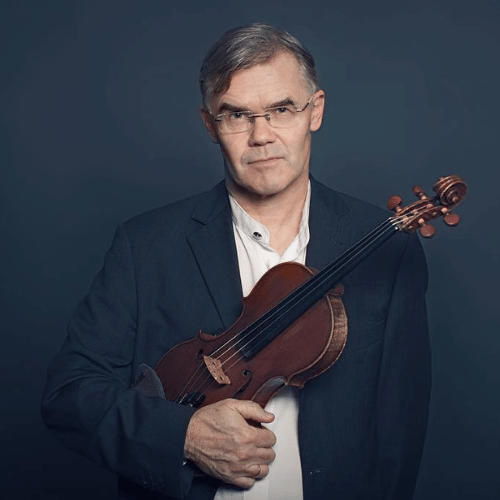
Paul Wright Violin
-
Born in Adelaide, Paul Wright began studying violin with Lyndall Hendrickson at the age of eight and, three years later, gained a place at the Yehudi Menuhin School in England. He later studied at the Guildhall School in London before continuing at the Juilliard School in New York under the renowned pedagogue Ivan Galamian.
Throughout his career, Paul has appeared as a director, soloist and concertmaster with many of Australia’s leading orchestras and ensembles, including the Australian String Quartet, Australian Chamber Orchestra, Ensemble of the Classic Era, Australian Brandenburg Orchestra, Tasmanian Symphony Orchestra, Melbourne Symphony Orchestra and West Australian Symphony Orchestra.
Paul has also enjoyed a distinguished career as an educator and chamber music coach, teaching at the Australian National Academy of Music in Melbourne. He served as Head of Strings at UWA for 25 years and was Winthrop Professor until 2015. From 2019 to 2022, he was Head of Strings at WAAPA and is currently a Music Fellow at St George’s College.
Born in Adelaide, Paul Wright began studying violin with Lyndall Hendrickson at the age of eight and, three years later, gained a place at the Yehudi Menuhin School in England. He later studied at the Guildhall School in London before continuing at the Juilliard School in New York under the renowned pedagogue Ivan Galamian.
Throughout his career, Paul has appeared as a director, soloist and concertmaster with many of Australia’s leading orchestras and ensembles, including the Australian String Quartet, Australian Chamber Orchestra, Ensemble of the Classic Era, Australian Brandenburg Orchestra, Tasmanian Symphony Orchestra, Melbourne Symphony Orchestra and West Australian Symphony Orchestra.
Paul has also enjoyed a distinguished career as an educator and chamber music coach, teaching at the Australian National Academy of Music in Melbourne. He served as Head of Strings at UWA for 25 years and was Winthrop Professor until 2015. From 2019 to 2022, he was Head of Strings at WAAPA and is currently a Music Fellow at St George’s College.
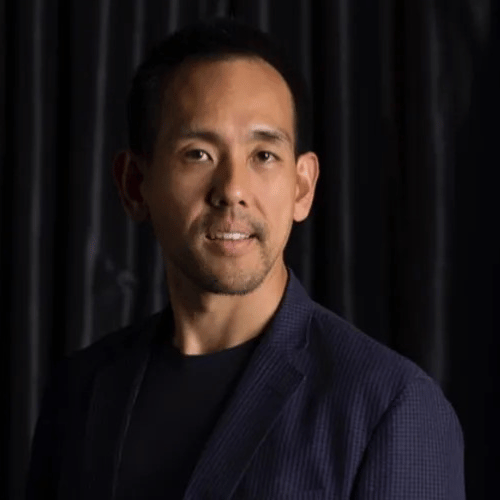
Raymond Yong Piano
Tiani is a Resident Music Scholar at St George’s College and is in her second year of a Bachelor of Music at WAAPA.
Tiani earned eight gold medals in the Bunbury WA Performing Arts Eisteddfod, achieving the ‘Senior Vocal Scholarship’ in 2023 and the ‘Senior Aggregate Award Winner’ in 2024.
A recipient of the ‘St. Mary’s Instrumental/Vocal Scholarship’ for three consecutive years, she performed in the Anglican Schools Commission’s Select Choir and has performed as a soloist wit the Philharmonic South West Orchestra in 2024.
-
Born in Malaysia, Raymond Yong emigrated to Australia at the age of two and later studied piano and conducting at the University of Melbourne under Stephen McIntyre and John Hopkins. A German government scholarship then took him to Hannover, where he undertook advanced piano studies with Karl-Heinz Kämmerling at the University of Music and Theater in Hannover.
Throughout his career, Raymond has performed extensively in Australia and internationally appearing with many of the country’s leading instrumentalists, singers and ensembles. He has been a guest concerto soloist with the Auckland Philharmonia, Melbourne, Sydney, Queensland, Tasmanian and West Australian Symphony Orchestras, and has appeared at festivals for Musica Viva Australia and the Melbourne International Arts Festival.
Now based in Perth, Raymond combines performance with teaching and research. His doctoral work explored approaches to reducing pain and injury risk for pianists while optimising performance outcomes. Raymond has taught at WAAPA and the UWA Conservatorium of Music and is currently a Music Fellow at St George’s College.
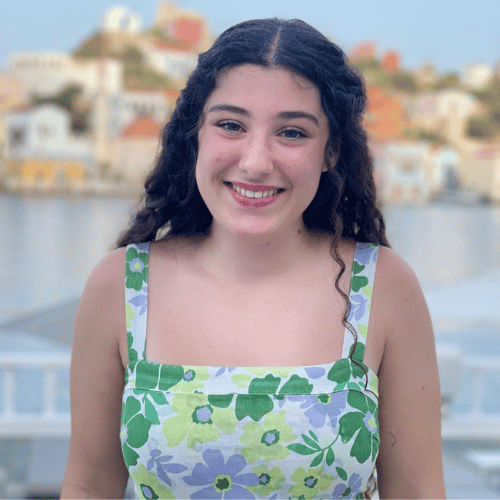
Tiani Glasgow Soprano
-
Tiani is a Resident Music Scholar at St George’s College and is in her second year of a Bachelor of Music at WAAPA.
Tiani earned eight gold medals in the Bunbury WA Performing Arts Eisteddfod, achieving the ‘Senior Vocal Scholarship’ in 2023 and the ‘Senior Aggregate Award Winner’ in 2024.
A recipient of the ‘St. Mary’s Instrumental/Vocal Scholarship’ for three consecutive years, she performed in the Anglican Schools Commission’s Select Choir conducted by Perry Joyce. Tiani was also honoured to perform as a soloist alongside the Philharmonic South West Orchestra in 2024.
Born in Malaysia, Raymond Yong emigrated to Australia at the age of two and later studied piano and conducting at the University of Melbourne under Stephen McIntyre and John Hopkins. A German government scholarship then took him to Hannover, where he undertook advanced piano studies with Karl-Heinz Kämmerling at the University of Music and Theater in Hannover.
Throughout his career, Raymond has performed extensively in Australia and internationally appearing with many of the country’s leading instrumentalists, singers and ensembles. He has been a guest concerto soloist with the Auckland Philharmonia, Melbourne, Sydney, Queensland, Tasmanian and West Australian Symphony Orchestras, and has appeared at festivals for Musica Viva Australia and the Melbourne International Arts Festival.
Now based in Perth, Raymond combines performance with teaching and research. His doctoral work explored approaches to reducing pain and injury risk for pianists while optimising performance outcomes. Raymond has taught at WAAPA and the UWA Conservatorium of Music and is currently a Music Fellow at St George’s College.
Frida Iacopetta Violin

Frida is Resident Music Scholar at St George’s College currently in her first year of a Bachelor of Music at UWA under the guidance of Shaun Lee – Chen.
Frida was drawn to the resonance and intricacy of violin at eight years old, and that passion has been a continuous presence in her life since that first introduction.
Frida has performed as a member of the Southwest Philharmonic Orchestra in Bunbury and the WA Young Artists Chamber Music Program, as well as participating in solo and ensemble performances across the South West.
-
Frida is Resident Music Scholar at St George’s College currently in her first year of a Bachelor of Music at UWA under the guidance of Shaun Lee – Chen.
Frida was drawn to the resonance and intricacy of violin at eight years old, and that passion has been a continuous presence in her life since that first introduction.
Frida has performed as a member of the Southwest Philharmonic Orchestra in Bunbury and the WA Young Artists Chamber Music Program, as well as participating in solo and ensemble performances across the South West.
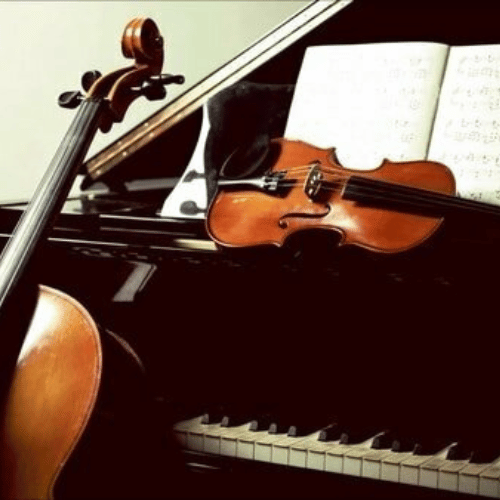
Piano Trio
-
Ha Yoon Kim (violin), Aiden Luo (cello) and Ethan Luo (piano) are a new piano trio based at St George’s College.
Coached by Paul Wright, the piano trio is an ensemble of talend musicians aged between 11 and 13 and were formed to develop their instrumental talents through chamber music.
Ha Yoon Kim (violin), Aiden Luo (cello) and Ethan Luo (piano) are a new piano trio based at St George’s College.
Coached by Paul Wright, the piano trio is an ensemble of talend musicians aged between 11 and 13 and were formed to develop their instrumental talents through chamber music.
About the Music
-
Sicilienne and Rigaudon
Few violinists have left as distinctive a mark on the repertoire as Fritz Kreisler, whose short character pieces continue to charm audiences with their elegance, warmth and unmistakable personality. Born in Vienna in 1875, Kreisler was celebrated not only for his virtuosity but also for the uniquely expressive quality of his playing, which audiences described as deeply human and almost vocal in character. His compositions reflect these same qualities, combining technical brilliance with melodic immediacy and refined charm.
Sicilienne and Rigaudon is among his best-known works. Kreisler originally presented the piece as an arrangement of music by the eighteenth-century composer François Francœur, though he later admitted that the work was in fact largely his own creation. The revelation caused considerable controversy at the time, but it also demonstrated the extraordinary skill with which Kreisler absorbed and recreated the musical language of earlier periods. Rather than a straightforward imitation of Baroque music, the work is best understood as a loving homage filtered through the sensibilities of the early twentieth century.
The two dances provide sharply contrasting moods. The Sicilienne unfolds with gentle lyricism and flowing dotted rhythms associated with pastoral Baroque music. Its graceful melody and understated elegance evoke an atmosphere of nostalgia and quiet refinement. By contrast, the Rigaudon bursts forth with rhythmic vitality, playful energy and sparkling virtuosity. Rapid passagework, lively articulation and buoyant dance rhythms transform the piece into an exuberant showcase for the violin.
Despite its brevity, Sicilienne and Rigaudon captures many of the qualities that made Kreisler such a beloved musical figure. The work balances sophistication with accessibility, and technical flair with genuine warmth.
Fritz KREISLER
-
Chanson de matin
Edward Elgar composed Chanson de Matin in 1889, at a time when he was still struggling to establish himself professionally. Written well before the international triumph of the Enigma Variations, the piece belongs to a formative period in Elgar’s career when he was composing primarily for local performers and smaller concert settings. Originally conceived for violin and piano, it was later arranged for orchestra and various instrumental combinations, becoming one of his most enduringly popular shorter works.
The title, meaning “Morning Song”, perfectly captures the work’s radiant and optimistic spirit. A broad, noble melody unfolds over a gently flowing accompaniment, immediately establishing an atmosphere of warmth and serenity. Elgar’s gift for expansive lyricism is already unmistakable, along with the harmonic richness and emotional sincerity that would later define his mature style.
Edward ELGAR
Few violinists have left as distinctive a mark on the repertoire as Fritz Kreisler, whose short character pieces continue to charm audiences with their elegance, warmth and unmistakable personality. Born in Vienna in 1875, Kreisler was celebrated not only for his virtuosity but also for the uniquely expressive quality of his playing, which audiences described as deeply human and almost vocal in character. His compositions reflect these same qualities, combining technical brilliance with melodic immediacy and refined charm.
Sicilienne and Rigaudon is among his best-known works. Kreisler originally presented the piece as an arrangement of music by the eighteenth-century composer François Francœur, though he later admitted that the work was in fact largely his own creation. The revelation caused considerable controversy at the time, but it also demonstrated the extraordinary skill with which Kreisler absorbed and recreated the musical language of earlier periods. Rather than a straightforward imitation of Baroque music, the work is best understood as a loving homage filtered through the sensibilities of the early twentieth century.
The two dances provide sharply contrasting moods. The Sicilienne unfolds with gentle lyricism and flowing dotted rhythms associated with pastoral Baroque music. Its graceful melody and understated elegance evoke an atmosphere of nostalgia and quiet refinement. By contrast, the Rigaudon bursts forth with rhythmic vitality, playful energy and sparkling virtuosity. Rapid passagework, lively articulation and buoyant dance rhythms transform the piece into an exuberant showcase for the violin.
Despite its brevity, Sicilienne and Rigaudon captures many of the qualities that made Kreisler such a beloved musical figure. The work balances sophistication with accessibility, and technical flair with genuine warmth.
Edward Elgar composed Chanson de Matin in 1889, at a time when he was still struggling to establish himself professionally. Written well before the international triumph of the Enigma Variations, the piece belongs to a formative period in Elgar’s career when he was composing primarily for local performers and smaller concert settings. Originally conceived for violin and piano, it was later arranged for orchestra and various instrumental combinations, becoming one of his most enduringly popular shorter works.
The title, meaning “Morning Song”, perfectly captures the work’s radiant and optimistic spirit. A broad, noble melody unfolds over a gently flowing accompaniment, immediately establishing an atmosphere of warmth and serenity. Elgar’s gift for expansive lyricism is already unmistakable, along with the harmonic richness and emotional sincerity that would later define his mature style.
Although modest in scale, Chanson de Matin demonstrates Elgar’s remarkable ability to convey emotional depth through simplicity. The music avoids overt drama, instead relying on carefully shaped melodic lines and subtle harmonic colouring to create a sense of quiet uplift and dignity. The central section introduces a touch more intensity before the opening material returns with renewed warmth and confidence.
The work also reflects the distinctly lyrical character of English music at the turn of the twentieth century. There is a sense of openness and nobility in the melodic writing that feels both intimate and expansive. Elgar’s music often balances grandeur with vulnerability, and even in this relatively small-scale composition there is an unmistakable emotional honesty that continues to resonate with listeners.
Today, Chanson de Matin remains one of Elgar’s most beloved miniatures. Its graceful elegance and timeless melodic appeal have secured its place in the repertoire, offering performers an opportunity to communicate warmth, lyricism and expressive poise within a beautifully concentrated musical form..
-
Wie Melodien zieht es mir, Op. 105, No. 1
Johannes Brahms composed Wie Melodien zieht es mir in 1886 as part of his Op. 105 collection of songs. By this stage in his career, Brahms was widely regarded as one of Europe’s leading composers, admired for the depth, craftsmanship and emotional complexity of his music. His songs, or Lieder, form an especially important part of his output, revealing a more intimate and introspective side of his musical personality.
The poem by Klaus Groth reflects on the elusive nature of artistic inspiration and the difficulty of fully expressing emotion through words. Thoughts and feelings pass through the mind “like melodies”, beautiful yet fleeting and impossible to capture completely. Brahms responds to this imagery with music of remarkable subtlety and restraint.
The song opens with a flowing, almost improvisatory melody that drifts gently above the piano accompaniment. The vocal line unfolds with natural flexibility, mirroring the poem’s contemplative tone. Beneath it, the piano provides warmth and motion through delicate harmonic shifts and gently undulating rhythms. The relationship between voice and accompaniment is especially important, as the piano often suggests emotional undercurrents that remain only partially expressed in the text.
One of the song’s most striking qualities is its emotional economy. Brahms avoids overt drama or theatrical display, instead allowing the music’s expressive depth to emerge gradually through nuance and understatement. The result is deeply intimate, inviting listeners into a reflective inner world where emotion is sensed rather than declared outright.
Widely regarded as one of Brahms’s finest songs, Wie Melodien zieht es mir demonstrates his extraordinary ability to fuse poetry and music into a unified expressive whole. Within a brief span, he creates music of profound tenderness, introspection and poetic sensitivity.
Johannes BRAHMS
Sicilienne and Rigaudon
-
My Mother Bids Me Bind My Hair
Haydn is often celebrated as the “father” of the symphony and string quartet, yet his vocal music reveals another important aspect of his artistry: an ability to communicate warmth, elegance and humanity through simplicity. My Mother Bids Me Bind My Hair is among his most charming English songs and likely dates from the period of Haydn’s visits to London during the 1790s.
The text reflects on youth, beauty and the passing of time. The speaker gently resists superficial concerns about appearance, recognising that outward beauty inevitably fades with age. Haydn responds not with melancholy but with music of grace, balance and quiet wisdom.
The melody unfolds with remarkable naturalness, shaped by the rhythms and inflections of the text itself. Haydn’s vocal writing is clear and unforced, allowing the poetry to speak directly and sincerely. The accompaniment remains delicate and supportive, enhancing the expressive character of the song without drawing attention away from the vocal line.
Like many songs of the Classical era, the work was intended for performance in domestic or salon settings rather than large concert halls. Its intimacy is therefore central to its character. Rather than dramatic intensity, the song offers refinement, charm and emotional sincerity, qualities that reflect Haydn’s broader musical personality.
Although brief, the song demonstrates Haydn’s extraordinary craftsmanship. Every phrase feels carefully balanced, and every musical gesture serves the expressive meaning of the text.
Joseph HAYDN
Violin Sonata No. 9 in A Major (Kreutzer Sonata), Op. 47
Felix MENDELSSOHN
Beethoven’s Kreutzer Sonata is one of the towering achievements of the violin repertoire, remarkable for both its scale and its dramatic intensity. Completed in 1803 during a period of extraordinary creative expansion, the work shattered contemporary expectations of the violin sonata, transforming it from an elegant chamber piece into a work of almost symphonic power.
Originally dedicated to the violinist George Bridgetower, who gave the premiere alongside Beethoven himself at the piano, the sonata was later rededicated to the French violinist Rodolphe Kreutzer, though Kreutzer reportedly never performed it, considering the work too extravagant and difficult.
The sonata opens with a strikingly dramatic introduction before erupting into a fiery Presto of immense energy and technical demand. Beethoven treats the violin and piano as equal partners, engaging them in a relentless dialogue. The second movement provides contrast through a richly varied set of variations on a serene theme, moving through moments of lyricism, brilliance and profound introspection. The final movement bursts forth with exuberant momentum, drawing on the rhythmic vitality of the tarantella and driving the work to a thrilling conclusion.
The Kreutzer Sonata occupies a pivotal place in Beethoven’s output, standing at the threshold of his heroic middle period. Its emotional extremes, structural boldness and virtuosic writing expanded the possibilities of chamber music and influenced generations of composers. More than two centuries later, the sonata remains a powerful testament to Beethoven’s revolutionary spirit and his ability to fuse drama, intellect and raw emotional force into a single compelling musical statement.
-
Piano Trio No. 1, Op. 49
I. Molto allegro agitato
When Felix Mendelssohn completed his Piano Trio No. 1 in 1839, it was immediately recognised as a masterpiece of the chamber music repertoire. Robert Schumann famously described it as “the master trio of our age”, placing Mendelssohn alongside Beethoven and Schubert as one of the great composers for piano trio.
The first movement begins with one of Mendelssohn’s most memorable melodies, introduced by the cello in a restless, yearning gesture before being taken up by the violin. From the opening bars, the music pulses with emotional urgency and forward momentum. The piano writing is especially brilliant and virtuosic, reflecting Mendelssohn’s own reputation as one of the finest pianists of his time.
Marked Molto allegro agitato, the movement combines lyrical beauty with dramatic intensity. Rapid figurations, sweeping melodic lines and sudden contrasts of mood create an atmosphere of constant motion and emotional volatility. Yet despite its passion, the music remains remarkably clear in texture and structure. Mendelssohn’s classical sense of balance ensures that even the most energetic passages retain elegance and precision.
The interaction between the three instruments is central to the work’s expressive power. Rather than treating the strings as accompaniment to the piano, Mendelssohn creates a true chamber dialogue in which all three performers contribute equally to the musical conversation. Themes are exchanged fluidly between instruments, creating a sense of unity and shared momentum.
Chanson de Matin
Edward ELGAR
(1857 - 1934)
Ludwig van BEETHOVEN
(1770 - 1827)
Fritz KREISLER
(1875 - 1962)
I. Adagio sostenuto - Presto
II. Andante con variazioni
III. Presto
-
Miniatures for Piano Trio Set 1, H. 87 - 89
II. Gavotte
Frank Bridge composed his Miniatures for Piano Trio in 1908, during the earlier phase of a career that would later move toward a far more experimental harmonic language. Today Bridge is often remembered as the teacher of Benjamin Britten, yet his own music reveals a distinctive and highly individual compositional voice characterised by refinement, sensitivity and expressive subtlety.
The Miniatures are concise character pieces, each exploring a particular mood or dance style. The second movement, Gavotte, takes inspiration from the elegant French court dance that was popular during the Baroque era. Rather than attempting strict historical imitation, Bridge reimagines the dance through an early twentieth-century musical language, blending classical poise with richer harmonies and subtle modern touches.
The movement’s light-footed rhythms and graceful melodic exchanges create an atmosphere of charm and sophistication. The instruments interact with conversational ease, each contributing to the texture with clarity and delicacy. Although modest in scale, the piece is carefully crafted, demonstrating Bridge’s finely developed sense of balance and colour.
Beneath the surface elegance lies a gentle wit and playfulness that give the music much of its appeal. The Gavotte’s dance rhythms remain ever-present, but Bridge avoids heaviness or rigidity, allowing the music to move with natural flexibility and ease.
The piece offers a moment of intimacy and refinement within the broader concert programme. Its understated character demonstrates how much expressive richness can be achieved within a miniature form, reflecting Bridge’s remarkable ability to create music that is concise, elegant and quietly distinctive.
Frank BRIDGE
-
Violin Sonata No. 9 in A Major (Kreutzer Sonata) - Op. 47
I. Adagio sostenuto - Presto
II. Andante con variazioni
III. PrestoBeethoven’s Kreutzer Sonata is one of the towering achievements of the violin repertoire, remarkable for both its scale and its dramatic intensity. Completed in 1803 during a period of extraordinary creative expansion, the work shattered contemporary expectations of the violin sonata, transforming it from an elegant chamber piece into a work of almost symphonic power.
Originally dedicated to the violinist George Bridgetower, who gave the premiere alongside Beethoven himself at the piano, the sonata was later rededicated to the French violinist Rodolphe Kreutzer, though Kreutzer reportedly never performed it, considering the work too extravagant and difficult.
The sonata opens with a strikingly dramatic introduction before erupting into a fiery Presto of immense energy and technical demand. Beethoven treats the violin and piano as equal partners, engaging them in a relentless dialogue. The second movement provides contrast through a richly varied set of variations on a serene theme, moving through moments of lyricism, brilliance and profound introspection. The final movement bursts forth with exuberant momentum, drawing on the rhythmic vitality of the tarantella and driving the work to a thrilling conclusion.
The Kreutzer Sonata occupies a pivotal place in Beethoven’s output, standing at the threshold of his heroic middle period. Its emotional extremes, structural boldness and virtuosic writing expanded the possibilities of chamber music and influenced generations of composers. More than two centuries later, the sonata remains a powerful testament to Beethoven’s revolutionary spirit and his ability to fuse drama, intellect and raw emotional force into a single compelling musical statement.
Wie Melodien zieht es mir, Op. 105, No. 1
II. Gavotte
Piano Trio No. 1, Op. 49
My Mother Bids Me Bind My Hair
I. Molto allegro agitato
Johannes BRAHMS
Ludwig van BEETHOVEN
(1833 - 1897)
Johannes Brahms composed Wie Melodien zieht es mir in 1886 as part of his Op. 105 collection of songs. By this stage in his career, Brahms was widely regarded as one of Europe’s leading composers, admired for the depth, craftsmanship and emotional complexity of his music. His songs, or Lieder, form an especially important part of his output, revealing a more intimate and introspective side of his musical personality.
The poem by Klaus Groth reflects on the elusive nature of artistic inspiration and the difficulty of fully expressing emotion through words. Thoughts and feelings pass through the mind “like melodies”, beautiful yet fleeting and impossible to capture completely. Brahms responds to this imagery with music of remarkable subtlety and restraint.
The song opens with a flowing, almost improvisatory melody that drifts gently above the piano accompaniment. The vocal line unfolds with natural flexibility, mirroring the poem’s contemplative tone. Beneath it, the piano provides warmth and motion through delicate harmonic shifts and gently undulating rhythms. The relationship between voice and accompaniment is especially important, as the piano often suggests emotional undercurrents that remain only partially expressed in the text.
One of the song’s most striking qualities is its emotional economy. Brahms avoids overt drama or theatrical display, instead allowing the music’s expressive depth to emerge gradually through nuance and understatement. The result is deeply intimate, inviting listeners into a reflective inner world where emotion is sensed rather than declared outright.
Widely regarded as one of Brahms’s finest songs, Wie Melodien zieht es mir demonstrates his extraordinary ability to fuse poetry and music into a unified expressive whole. Within a brief span, he creates music of profound tenderness, introspection and poetic sensitivity.
Felix MENDELSSOHN
(1809 - 1847)
Joseph HAYDN
(1732 - 1809)
Frank BRIDGE
(1879 - 1941)
Frank Bridge composed his Miniatures for Piano Trio in 1908, during the earlier phase of a career that would later move toward a far more experimental harmonic language. Today Bridge is often remembered as the teacher of Benjamin Britten, yet his own music reveals a distinctive and highly individual compositional voice characterised by refinement, sensitivity and expressive subtlety.
The Miniatures are concise character pieces, each exploring a particular mood or dance style. The second movement, Gavotte, takes inspiration from the elegant French court dance that was popular during the Baroque era. Rather than attempting strict historical imitation, Bridge reimagines the dance through an early twentieth-century musical language, blending classical poise with richer harmonies and subtle modern touches.
The movement’s light-footed rhythms and graceful melodic exchanges create an atmosphere of charm and sophistication. The instruments interact with conversational ease, each contributing to the texture with clarity and delicacy. Although modest in scale, the piece is carefully crafted, demonstrating Bridge’s finely developed sense of balance and colour.
Beneath the surface elegance lies a gentle wit and playfulness that give the music much of its appeal. The Gavotte’s dance rhythms remain ever-present, but Bridge avoids heaviness or rigidity, allowing the music to move with natural flexibility and ease.
The piece offers a moment of intimacy and refinement within the broader concert programme. Its understated character demonstrates how much expressive richness can be achieved within a miniature form, reflecting Bridge’s remarkable ability to create music that is concise, elegant and quietly distinctive.
Haydn is often celebrated as the “father” of the symphony and string quartet, yet his vocal music reveals another important aspect of his artistry: an ability to communicate warmth, elegance and humanity through simplicity. My Mother Bids Me Bind My Hair is among his most charming English songs and likely dates from the period of Haydn’s visits to London during the 1790s.
The text reflects on youth, beauty and the passing of time. The speaker gently resists superficial concerns about appearance, recognising that outward beauty inevitably fades with age. Haydn responds not with melancholy but with music of grace, balance and quiet wisdom.
The melody unfolds with remarkable naturalness, shaped by the rhythms and inflections of the text itself. Haydn’s vocal writing is clear and unforced, allowing the poetry to speak directly and sincerely. The accompaniment remains delicate and supportive, enhancing the expressive character of the song without drawing attention away from the vocal line.
Like many songs of the Classical era, the work was intended for performance in domestic or salon settings rather than large concert halls. Its intimacy is therefore central to its character. Rather than dramatic intensity, the song offers refinement, charm and emotional sincerity, qualities that reflect Haydn’s broader musical personality.
Although brief, the song demonstrates Haydn’s extraordinary craftsmanship. Every phrase feels carefully balanced, and every musical gesture serves the expressive meaning of the text.
When Felix Mendelssohn completed his Piano Trio No. 1 in 1839, it was immediately recognised as a masterpiece of the chamber music repertoire. Robert Schumann famously described it as “the master trio of our age”, placing Mendelssohn alongside Beethoven and Schubert as one of the great composers for piano trio.
The first movement begins with one of Mendelssohn’s most memorable melodies, introduced by the cello in a restless, yearning gesture before being taken up by the violin. From the opening bars, the music pulses with emotional urgency and forward momentum. The piano writing is especially brilliant and virtuosic, reflecting Mendelssohn’s own reputation as one of the finest pianists of his time.
Marked Molto allegro agitato, the movement combines lyrical beauty with dramatic intensity. Rapid figurations, sweeping melodic lines and sudden contrasts of mood create an atmosphere of constant motion and emotional volatility. Yet despite its passion, the music remains remarkably clear in texture and structure. Mendelssohn’s classical sense of balance ensures that even the most energetic passages retain elegance and precision.
The interaction between the three instruments is central to the work’s expressive power. Rather than treating the strings as accompaniment to the piano, Mendelssohn creates a true chamber dialogue in which all three performers contribute equally to the musical conversation. Themes are exchanged fluidly between instruments, creating a sense of unity and shared momentum.
Miniatures for Piano Trio, Set 1, H. 87 - 89
Our Patrons
A Note of Thanks
-
The support of our generous community plays a vital role in bringing these performances to life. Your encouragement and commitment make a meaningful difference to the music, artists and opportunities presented on stage, and continue to inspire all involved.
Thank you to our supporters and friends, many of whom contribute across multiple areas of the College’s life.
-
Wendy Erber and Gary Hoffman
Tony and Sue Field
Janet Holmes à Court
Tony and Gwenyth Lennon
Jon and Mary Meyer
Jennifer Nicol
John Rodgers
Margie and Alastair Tulloch
Peter Wreford
-
Marino Evangelisti and Sandra Riccelli
Susan Hovell
Peter Ingram
John and Alison Rigg
-
Hugh and Mary Barrett-Lennard
David and Christine Burt
Craig Carter and Robyn Nettleton
John Cowdell
Tony and Lynne Edis
Peter and Glen Knight
Peter and Joelle Larsen
Christine Lawson-Smith
Hamish McGlashan
Di and Sandy Mercer
Frances Morrell
Robert and Lynette Nicholson
Maurice and Jennifer Owen
Anita Summers
Clive and Beth Trott
Paul and Jennifer Woods
Hugh and Mary Barrett-Lennard · David and Christine Burt · Craig Carter and Robyn Nettleton · John Cowdell
Tony and Lynne Edis · Peter and Glen Knight · Peter and Joelle Larsen · Christine Lawson-Smith · Hamish McGlashan
Di and Sandy Mercer · Frances Morrell · Robert and Lynette Nicholson · Maurice and Jennifer Owen · John and Alison Rigg
Anita Summers · Clive and Beth Trott · Paul and Jennifer Woods
-
Priscilla Campbell-Wilson
Jennifer and Tom Cook
Rosemary Cussons
Peter Eadington
Roger Paterson
The support of our generous community plays a vital role in bringing these performances to life. Your encouragement and commitment make a meaningful difference to the music, artists and opportunities presented on stage, and continue to inspire all involved.
Thank you to our supporters and friends, many of whom contribute across multiple areas of the College’s life.
-
Tony and Sue Field
Susan Hovel
Peter and Glen Knight
Tony and Gwyneth Lennon
Hamish McGlashan
Jon and Mary Meyer
Jennifer Nicol
John and Alison Rigg
Anita Summers
Clive and Beth Trott
To learn more about supporting the Music Program, please visit our webpage. If you’d like to have a conversation about how you can become involved, we’d be delighted to hear from you. Please contact Luke Donohoe on 9449 5523 or via email at ldonohoe@stgc.uwa.edu.au.
Become a Supporter
Dunsborough Program
Priscilla Campbell-Wilson · Jennifer and Tom Cook · Rosemary Cussons · Peter Eadington · Roger Paterson
Diamond
Gold
Silver
Platinum
Tony and Sue Field · Susan Hovel · Peter and Glen Knight · Tony and Gwyneth Lennon · Hamish McGlashan
Jon and Mary Meyer · Jennifer Nicol · John and Alison Rigg · Anita Summers · Clive and Beth Trott
Marino Evangelisti and Sandra Riccelli · Susan Hovell · Peter Ingram
Wendy Erber and Gary Hoffman · Tony and Sue Field · Janet Holmes à Court · Tony and Gwenyth Lennon · Jon and Mary Meyer Jennifer Nicol · John Rodgers · Margie and Alastair Tulloch · Peter Wreford