

Grieg’s Sonatas
Programme
Violin Sonata No. 1 in F major
Opus 8
I. Allegro con brio
II. Allegretto quasi andantino
III. Allegro molto vivace
Violin Sonata No. 2 in G major
Opus 13
I. Lento doloroso - Allegro vivace
II. Allegretto tranquillo
III. Allegro animato
Violin Sonata No. 3 in C minor
Opus 45
I. Allegro molto ed appassionato
II. Allegretto espressivo alla Romanza
III. Allegro animato
Artists
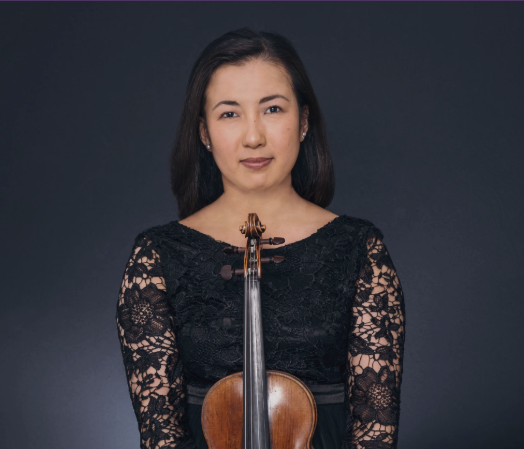
Akiko Miyazawa
-
Akiko Miyazawa is a Japanese-born violinist based in Australia, known for her expressive artistry as both a soloist and chamber musician. She began her musical studies at a young age and undertook extensive training in Japan and internationally, developing a distinctive voice grounded in both technical refinement and interpretive depth. She is a founding member of Cygnus Arioso, an ensemble recognised for its innovative and thoughtfully curated performances exploring connections between music, literature, and visual art.
As a performer, Akiko has appeared in a wide range of settings, from intimate recitals to major festival stages, and has collaborated with many distinguished musicians. Her repertoire spans the core violin canon as well as contemporary works, and she is particularly noted for her nuanced interpretations and sensitive ensemble playing. Alongside pianist Tommy Seah, she has performed complete cycles of sonatas for violin and piano by Beethoven and Brahms.
Violin

Tommy Seah
Piano
-
Tommy is a Singapore-born pianist and musicologist based in Perth. He began violin and piano at the age of four and moved to Perth at ten, studying with Anna Sleptsova at the West Australian Academy of Performing Arts (WAAPA), and later with Seta Tanyel and Leslie Howard in London. He holds Graduate Diploma and Master of Arts degrees in piano performance from WAAPA, a Licentiate Diploma (LTCL) from Trinity College London, and degrees in Engineering and Economics from The University of Western Australia.
As a soloist, Tommy has performed across Australia, Asia, Europe, and North America, and has competed in major international competitions including the Hamamatsu and Liszt International Piano Competitions. An active chamber musician, he has collaborated widely, including with Akiko Miyazawa, with whom he has performed the complete violin sonatas of Beethoven and Brahms. Since 2017, he has taught at WAAPA and is the founder of Perth Recital Series.
About the Music
Violin Sonata No. 1 in F major
-
Composed in 1865 when Edvard Grieg was just twenty-two years old, the Violin Sonata No. 1 in F major stands as an early but remarkably assured statement of his artistic voice. At this stage in his career, Grieg was still absorbing the influences of the German Romantic tradition, particularly the music of Schumann and Mendelssohn, yet the sonata already reveals the beginnings of a distinctly Norwegian sensibility. Its melodic contours, rhythmic vitality, and emphasis on lyrical expression foreshadow the national style that would later define his mature works. Central to the sonata is the equal partnership between violin and piano, a hallmark of Grieg’s chamber writing, in which both instruments engage in an intimate and expressive dialogue.
I. Allegro con brio
The opening movement immediately establishes a tone of freshness and vitality. Its principal theme is lively and buoyant, characterised by rhythmic energy and a sense of forward momentum. This energetic opening is balanced by more lyrical secondary material, creating a contrast that lends the movement both structural clarity and emotional warmth. The interplay between violin and piano is particularly striking, with ideas passed fluidly between the two instruments, often in a conversational manner. The harmonic language, while rooted in Romantic tradition, occasionally hints at modal inflections that suggest a folk-like character. Throughout the movement, Grieg demonstrates a keen sense of pacing, allowing moments of brilliance to coexist with passages of gentle introspection.II. Allegretto quasi andantino
The second movement offers a marked contrast in mood, unfolding with a quiet, introspective lyricism. Its gently flowing melodies possess a simplicity that evokes the character of a folk song, though they are entirely original. The violin sings with a warm, expressive tone, supported by delicate and understated piano textures. Subtle shifts in harmony enrich the music’s emotional palette, creating moments of poignancy beneath its outward calm. The movement’s restrained character allows for a heightened sense of intimacy, drawing the listener into a more reflective sound world. It is in passages such as these that Grieg’s gift for melody and his sensitivity to instrumental colour are most evident.III. Allegro molto vivace
The finale brings the sonata to an exuberant conclusion, bursting with rhythmic vitality and dance-like energy. The movement’s themes are lively and engaging, often characterised by syncopations and accents that suggest rustic dance traditions. Here, Grieg’s emerging interest in Norwegian folk music becomes more apparent, not through direct quotation but through stylistic evocation. The violin and piano engage in spirited exchanges, driving the music forward with increasing momentum. The brilliance of the writing and the clarity of its textures ensure that the movement retains a sense of lightness, even at its most energetic moments. The sonata concludes with a joyful and confident flourish, capturing the youthful spirit and creative promise of the composer.
Violin Sonata No. 2 in G major
-
Composed in 1867, the Violin Sonata No. 2 in G major marks a significant step forward in Grieg’s artistic development. Written only two years after the First Sonata, it reflects a growing confidence in both form and expression, as well as a more pronounced engagement with Norwegian musical identity. Grieg himself described this sonata as representing “the Norwegian element” more strongly, and indeed the work is infused with rhythms, melodic gestures, and harmonic colours that evoke the spirit of Norwegian folk music. At the same time, the sonata retains a firm grounding in the classical tradition, demonstrating Grieg’s ability to synthesise national character with formal coherence.
I. Lento doloroso – Allegro vivace
The first movement begins with a sombre and introspective introduction marked Lento doloroso. Here, the music unfolds with a sense of searching intensity, its dark harmonies and expressive lines creating an atmosphere of quiet tension. This introductory material serves as a foil to the lively Allegro vivace that follows, in which rhythmic vitality and energetic motifs come to the fore. The contrast between the two sections is striking, lending the movement a strong dramatic profile. Throughout the Allegro, the violin and piano engage in dynamic interplay, with sharply defined rhythms and bold gestures driving the music forward. The integration of contrasting moods within a unified structure is a hallmark of Grieg’s growing compositional maturity.II. Allegretto tranquillo
The second movement provides a moment of lyrical repose. Its gently flowing lines and transparent textures evoke the simplicity and directness of a folk melody, while maintaining a refined and poised character. The violin’s melodic line unfolds with a natural ease, supported by a delicately balanced piano accompaniment. Subtle variations in phrasing and harmony lend the music a quiet expressiveness, allowing it to sustain interest without overt dramatic contrast. This movement exemplifies Grieg’s ability to create deeply affecting music through restraint and clarity.III. Allegro animato
The finale is vibrant and full of energy, characterised by rhythmic drive and a sense of spontaneity. Dance-like figures dominate the musical texture, reflecting the influence of Norwegian folk dances. The interplay between violin and piano is particularly vivid, with both instruments contributing to the movement’s forward momentum and exuberant character. The music builds steadily toward a brilliant conclusion, its vitality and rhythmic precision leaving a lasting impression of joy and animation.
Violin Sonata No. 3 in C minor
-
Completed in 1887, the Violin Sonata No. 3 in C minor stands as the culmination of Grieg’s contributions to the genre. Written more than a decade after the Second Sonata, it reflects a composer at the height of his creative powers, with a fully developed musical language and a broader, more ambitious conception of form. The work is symphonic in scale, with a heightened sense of drama and emotional intensity. At the same time, it retains the lyrical expressiveness and national character that are central to Grieg’s style. The relationship between violin and piano is more integrated and complex than in the earlier sonatas, resulting in a richly textured and deeply expressive work.
I. Allegro molto ed appassionato
The opening movement is expansive and impassioned, marked by sweeping themes and a strong sense of dramatic urgency. From its forceful opening gestures, the music conveys a heightened emotional intensity, alternating between moments of turbulence and lyrical reflection. The violin and piano are closely intertwined, each contributing to the development of thematic material and the shaping of the movement’s overall trajectory. The harmonic language is richer and more adventurous than in the earlier sonatas, adding depth and complexity to the musical narrative.II. Allegretto espressivo alla Romanza
In contrast to the intensity of the first movement, the second unfolds as a lyrical and introspective romance. Its long, singing lines highlight the expressive capabilities of the violin, while the piano provides a warm and supportive accompaniment. The atmosphere is intimate and reflective, with subtle harmonic shifts enhancing the music’s emotional resonance. This movement serves as a moment of repose, offering a glimpse into a more contemplative aspect of Grieg’s musical voice.III. Allegro animato
The finale is vigorous and rhythmically driven, combining technical brilliance with a strong sense of direction. Its bold themes and energetic rhythms propel the music forward, creating a sense of unstoppable momentum. The interplay between violin and piano is dynamic and tightly integrated, culminating in a powerful and decisive conclusion. The movement brings the sonata, and indeed the set of three sonatas, to an emphatic and satisfying close, affirming Grieg’s mastery of the violin sonata form.
Our Patrons
The generous contribution of our patrons allows us to continue encouraging and guiding aspiring young musicians.
-
Wendy Erber and Gary Hoffman
Tony and Sue Field
Janet Holmes à Court
Tony and Gwenyth Lennon
Jon and Mary Meyer
Jennifer Nicol
John Rodgers
Margie and Alastair Tulloch
Peter Wreford
-
Wendy Erber and Gary Hoffman
Marino Evangelisti and Sandra Riccelli
Susan Hovell
John and Alison Rigg
-
Hugh and Mary Barrett-Lennard
David and Christine Burt
Craig Carter and Robyn Nettleton
John Cowdell
Tony and Lynne Edis
Peter Ingram
Peter and Glen Knight
Peter and Joelle Larsen
Christine Lawson-Smith
Hamish McGlashan
Di and Sandy Mercer
Frances Morrell
Robert and Lynette Nicholson
Maurice and Jennifer Owen
Anita Summers
Clive and Beth Trott
Paul and Jennifer Woods
-
Priscilla Campbell-Wilson
Jennifer and Tom Cook
Rosemary Cussons
Peter Eadington
Roger Paterson
If you’d like to support the music program, you can find out more via our website or by emailing Luke Donohoe.